
King’s College
The Gothic Pinnacle of the Cambridge Skyline
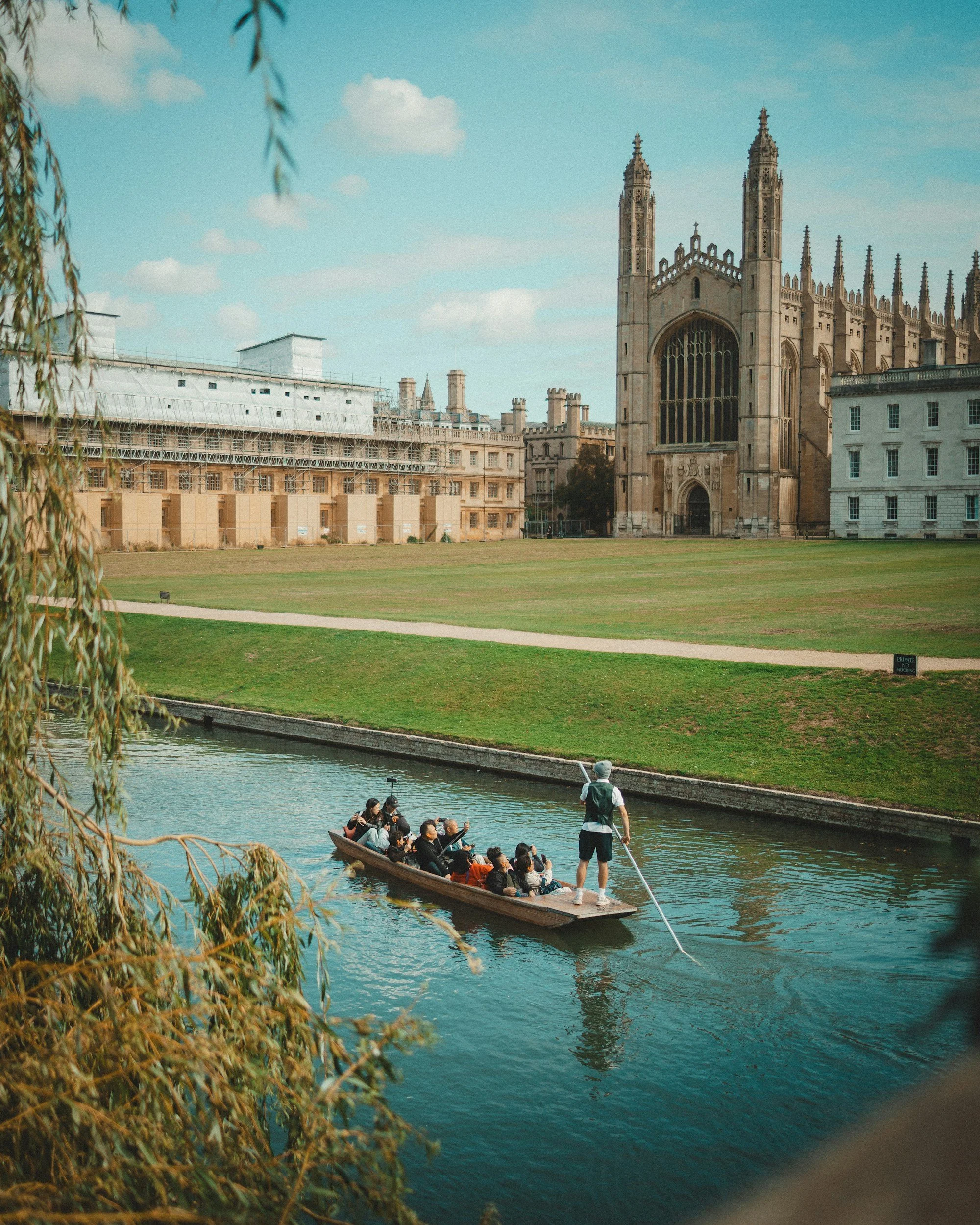
The Royal Vision: A Legacy of Sovereignty and Scholarship
Dominating the center of the city with its soaring perpendicular Gothic architecture, King’s College stands as the most internationally recognized symbol of the University of Cambridge. Founded in 1441 by King Henry VI, the college was envisioned as a grand architectural and intellectual counterpart to his other foundation, Eton College. For the Explorers Insight reader, King’s represents a masterclass in royal ambition, where the transition from the Middle Ages to the Renaissance is carved into every limestone block and stained-glass pane.
In the Cambridge of 2026, King’s College remains an active epicenter of world-class choral music, radical economic thought, and pioneering scientific research, all housed within a "palace of learning" that has taken over five centuries to perfect.
King’s College Chapel: The World’s Finest Gothic Interior
The undisputed crown jewel of the college is the King’s College Chapel. Its construction spanned five kings and several decades of civil unrest during the Wars of the Roses, resulting in a structure that is as much a political statement as it is a place of worship.
1. The Fan Vaulting: A Mathematical Miracle
The most striking interior feature is the stone fan vault, the largest of its kind in the world. Completed between 1512 and 1515 by master mason John Wastell, the vault appears to defy gravity.
The Engineering Insight: Despite its delicate, lace-like appearance, the vault is a triumph of structural engineering. The stone ribs distribute the immense weight of the roof outward to massive external buttresses.
The Scale: The chapel stretches 88 meters in length, with the vault hovering 24 meters above the floor, creating an acoustic environment that is unparalleled for choral performances.
2. The Tudor Stained Glass
The chapel houses the most complete set of 16th-century stained glass in existence. These 26 massive windows survived the English Civil War and the iconoclasm of the 17th century.
The Narrative Insight: The windows are designed as a "typological" sequence—pairing scenes from the Old Testament with those of the New Testament to show the fulfillment of biblical prophecy. It is an 11,000-square-foot visual encyclopedia of Renaissance theology.
The Rubens Masterpiece: "The Adoration of the Magi"
Positioned behind the high altar is one of the most significant altarpieces in the United Kingdom: Peter Paul Rubens' "The Adoration of the Magi." Painted in 1634, the painting was gifted to the college in 1961.
The Artistic Insight: Rubens’ use of dynamic movement and vibrant color provides a stark, beautiful contrast to the rigid, vertical lines of the Gothic chapel.
The 2026 Perspective: The painting is now protected by a sophisticated, non-reflective climate-control system that allows visitors to see the depth of Rubens’ brushwork without the glare that plagued the exhibit for decades.
The Backs: An Architectural Dialogue with Nature
While the chapel faces the city, the rear of the college opens onto "The Backs"—a stretch of landscaped gardens and lawns where the colleges meet the River Cam. This area offers the "Explorers Insight" perspective on how Cambridge integrated its monastic heritage with the picturesque movement of the 18th century.
The Gibbs Building: Contrasting the Gothic chapel is the neoclassical Gibbs Building (1724). Designed by James Gibbs, this Portland stone structure represents the Age of Reason, emphasizing symmetry and classical proportions.
The Xu Zhimo Memorial: Beneath the willow trees near the bridge lies a white marble stone dedicated to the Chinese poet Xu Zhimo. His poem, "Leaving Cambridge Again," has made the college a site of literary pilgrimage.
🧭 Strategic Insights: Navigating the King’s College Narrative
The true value of King’s College is found in its "dual identity" as both a medieval monument and a modern powerhouse of ideas. For the explorer, the key insight is to look for the Tudor heraldry—the portcullises and roses—carved into the chapel walls; these were added by Henry VII and Henry VIII to legitimize their dynasty through the splendor of the building. To experience the chapel’s famous acoustics without the crowds, we recommend attending Evensong on a weekday afternoon. This 45-minute service is free and open to the public, allowing you to hear the world-renowned King’s College Choir in the setting for which their music was specifically composed. Furthermore, for the best photographic angle of the chapel's silhouette, position yourself on Queen’s Road at sunset; the light catches the limestone pinnacles, turning the entire structure into a golden beacon above the river.
-
The main entrance is located on King’s Parade in the heart of the city. From the Cambridge Train Station, you can take a local bus to the city center or walk for approximately 20 minutes through the historic shopping streets.
-
As one of the most visited sites in the UK, King’s College does charge an entry fee for tourists (typically ranging from £12 to £15). However, entry is free for Cambridge residents (with a CamCard), University of Cambridge students, and those attending religious services like Evensong.
-
The chapel is generally open to visitors daily, but because it is a functioning place of worship and a college facility, it may close for graduation ceremonies, recordings, or special services. It is essential to check the official college website on the morning of your visit for the latest opening times.
-
The famous lawns of King's College are strictly for the use of Fellows (professors) and their guests. However, there is one day a year—usually in June—when the "Keep Off the Grass" rule is traditionally lifted for students.
-
While the college hall is for members only, King’s Parade is lined with some of Cambridge’s best independent cafes and bakeries. The Copper Kettle, located directly opposite the chapel entrance, has been a favorite haunt of students and scholars for generations.