
Margate
The Renaissance of the British Seaside and the "Thanet Pivot"
Why Margate is Historically and Culturally Important
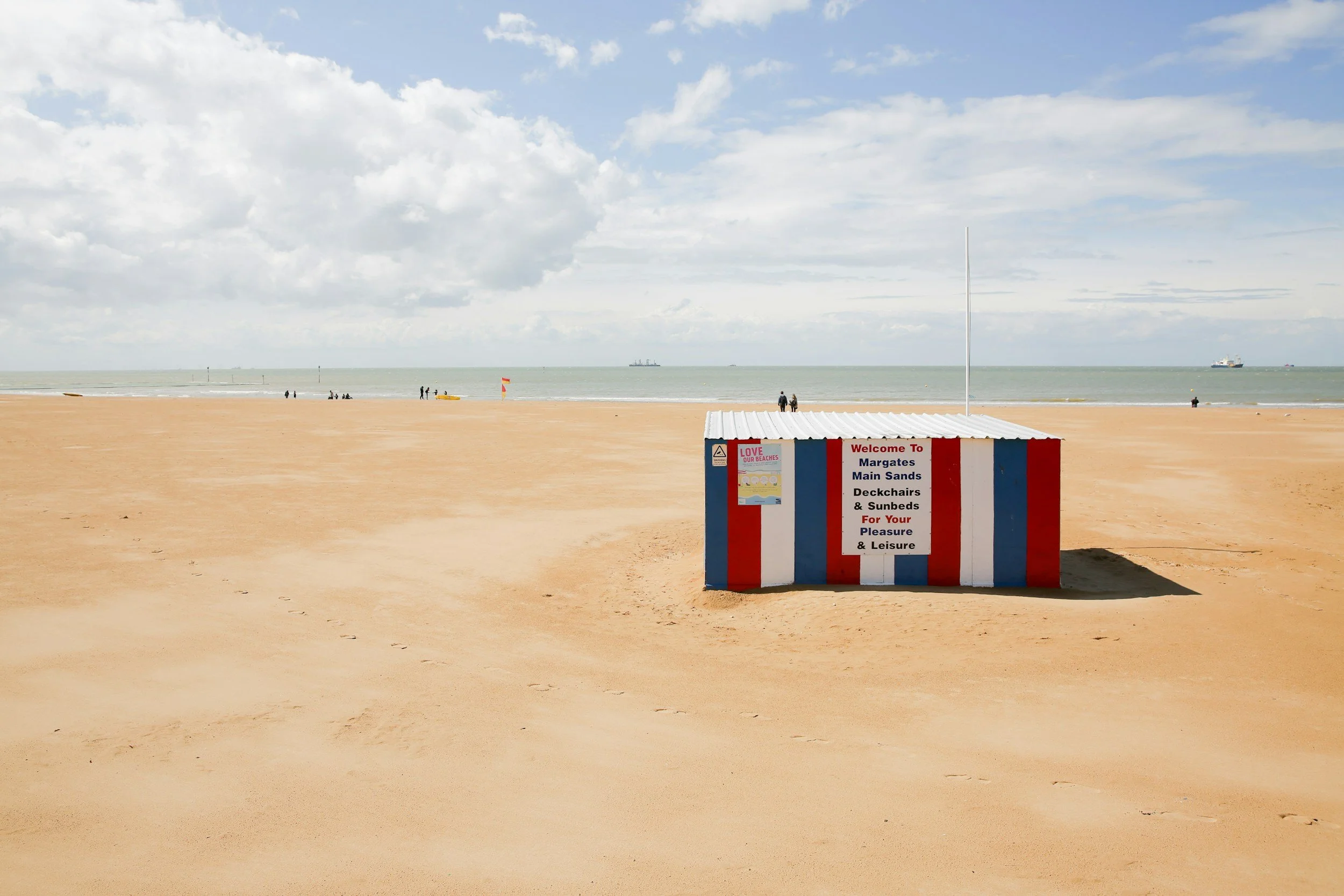
Margate is a quintessential maritime settlement positioned on the northernmost fringe of the Isle of Thanet in Kent. By definition, Margate holds a status of global historical significance as the progenitor of the modern seaside resort. In the mid-18th century, it became the site of a social revolution, transitioning the sea from a place of perilous labor into a theater of health and leisure. This distinction fundamentally altered the trajectory of British social history; it was here that the concept of the "holiday" was democratized, moving beyond the aristocratic Grand Tour to create a space where the burgeoning middle and working classes could seek respiratory and psychological relief.
For the 2026 traveler, Margate represents a sophisticated "Coastal Renaissance." It serves as a tactical case study in urban "Cultural Anchoring"—a process where the strategic placement of a world-class institution, the Turner Contemporary (opened in 2011), acted as a catalyst for the total revitalization of the local economy. This was further bolstered by the 2026 maturation of Dreamland, which has moved beyond its status as a vintage amusement park to become a premier multi-use heritage and music venue.
The cultural importance of Margate today lies in its unique ability to bridge the cognitive gap between "Old Kent" maritime grit and the "New England" creative economy. It has successfully avoided the sterile "museumification" that plagues many heritage towns. Unlike other coastal destinations that have pursued aggressive, high-end gentrification at the cost of local identity, Margate has retained a subversive, eclectic character. This is evidenced by the "Cliftonville Shift," where 2026 data shows a high density of artist-run spaces and independent galleries co-existing with traditional seafood stalls and amusement arcades.
In short, Margate’s importance is measured by three critical technical pillars:
The Creative Pressure Valve: It provides an essential topographical outlet for London-based entrepreneurs and artists (often referred to as "DFLs" or Down From Londoners) who seek to escape the capital’s high-velocity financial constraints while remaining within the 75-minute High-Speed 1 (HS1) logistical corridor.
The Atmospheric Anchor: Its unique light and north-facing orientation continue to make it a primary site for visual studies, maintaining the artistic lineage established by J.M.W. Turner, who claimed the skies over Margate were the most beautiful in Europe.
The Economic Blueprint: It demonstrates how "Slow Tourism" and heritage restoration can provide a more sustainable growth model than the volatile, "fast-resort" developments of the late 20th century.
As we move through 2026, Margate stands as a testament to the resilience of the British seaside. It is no longer merely a site of nostalgia, but a forward-facing laboratory for modern coastal living, sustainable gastronomy, and contemporary artistic expression.
The Geography and History of the Thanet Coastline
The Atomic Answer: Margate’s geography is defined by its north-facing sandy bays and dramatic chalk cliffs, situated on the extreme northeastern tip of Kent. Its 250-year history as a resort began in 1736 with the introduction of "bathing machines," eventually evolving into a Victorian tourism powerhouse. Unlike the pebble-strewn beaches of Sussex, Margate’s fine-grain sand and unique "Thanet light" have made it a topographical sanctuary for both holidaymakers and master painters like J.M.W. Turner.
Information Gain: A unique geographical insight for 2026 is Margate’s specific "Micro-climate of the East." Because the town faces north, it experiences unique light conditions where the sun both rises and sets over the sea during the summer months. This atmospheric phenomenon, combined with the reflective properties of the chalk cliff masonry, creates a high-fidelity light that J.M.W. Turner famously described as "the loveliest in all Europe." Technically, this is caused by the low-lying topography of Thanet, which allows moisture-laden air from the North Sea to dissipate quickly, resulting in more "sunshine hours" than the inland Weald of Kent.
The Historical Masonry: From Bathing Machines to Steamers
Margate’s history is a timeline of technological innovation in leisure:
The Georgian Innovation (1750s): Benjamin Beale, a local Quaker, invented the "Bathing Machine" with a folding canvas hood. By definition, this allowed modest Georgians to enter the sea without being seen, effectively launching the global "Sea Bathing" trend.
The Victorian Expansion: The arrival of the paddle steamers from London via the Thames Estuary transformed Margate into the "Londoner’s Playground." Unlike the elite, aristocratic character of nearby Broadstairs, Margate was a democratic space—the first true mass-market tourism destination.
The Golden Age of the Pier: The Margate Jetty (or "The Iron Pier"), designed by Eugenius Birch, was a technical marvel of its time, providing a stable anchor for steamers and a promenade for thousands of visitors.
The Isle of Thanet: A Geological Pivot
Geographically, Margate sits on the Isle of Thanet, which was a true island separated from the mainland by the Wantsum Channel until the late Middle Ages.
Chalk Cliffs: The coastline is composed of soft white chalk (Late Cretaceous), which is prone to rapid erosion.
The Ria Formations: The interaction between the North Sea and the chalk has created "Secret Coves" and tidal pools, such as Walpole Bay, which are essential for 2026 wellness travelers seeking natural cold-water immersion.
Power Phrase: Unlike the rugged, granite coasts of the West Country, the Thanet coastline is soft and malleable, resulting in wide, shallow bays that are thermally more efficient (warmer) for swimming.
Technical Retrieval: 2026 Environmental Status
In 2026, the geography of Margate is under active management. The Thanet Coast Project has implemented technical "No-Take Zones" to protect the chalk reef ecosystems. For the visitor, this means the water quality and marine biodiversity (including the rare stalked jellyfish) are at their highest levels in decades, making the Main Sands a premium ecological as well as recreational asset.
What is Margate today? The 2026 Creative Shift
By definition, Margate in 2026 is a "place of two halves," existing as a dual-reality town where traditional seaside grit meets a high-velocity creative economy. The most significant driver of this shift is the DFL (Down From London) migration, which reached a tactical peak in the mid-2020s. Unlike the transient day-trippers of the Victorian era, these new residents are "Creative Stakeholders"—artists, designers, and restaurateurs who have imported the cultural masonry of Hackney and Peckham into the Thanet coastline.
Information Gain: While the DFL influx has driven property prices to record highs, it has also sparked a "Reverse Brain Drain." In 2026, Margate is no longer a town people leave to find success; it is where they go to build it. A unique insight into this economy is the emergence of "Hyper-Localism." Businesses are increasingly moving away from London-centric supply chains, with restaurants now sourcing 90% of their produce from the Thanet "Garden of England" and local pottery studios providing the tableware for the town's Michelin-recommended eateries.
The Actionable Insight: The Old Town as a Tactical Center
The Old Town has solidified its status as the tactical anchor for independent retail. In short, it is a car-free sanctuary of winding lanes where "High-Fidelity Gastronomy" is the primary draw. In 2026, the Margate Restaurant Week (held every February) has become a national fixture, showcasing a culinary scene that rivals any London borough for technical skill and ingredient provenance.
Must-See Attractions: Beyond the Main Sands
To maximize your visit, look beyond the traditional beachfront. Margate’s 2026 attractions are a mix of high-concept art, vintage thrill-seeking, and geological mysteries.
The Cultural Anchors
Turner Contemporary: In short, this is the building that saved Margate. By 2026, its programming has evolved into "Biographic Art," linking the works of J.M.W. Turner with modern environmental crises. The Power Phrase: Unlike standard galleries, the Turner uses its glass walls to make the changing North Sea light a permanent part of every exhibition.
Dreamland: Reopened and fully matured in 2026, it is now the UK’s premier "Heritage Amusement Park." Its crowning jewel, the Scenic Railway (Britain's oldest rollercoaster), remains a tactical masterpiece of wooden engineering.
The Technical Mystery: The Shell Grotto
Expert Insight: Discovered in 1835, the Shell Grotto remains Kent’s greatest unsolved archaeological puzzle. Composed of 4.6 million shells arranged in intricate mosaics, its 2026 preservation status is critical. Recent moisture-control technology has been installed to prevent "Chalk Decay," yet the grotto’s origin—whether it is a 12th-century Templar site or an elaborate Regency folly—remains unproven. In short, it is a 21-meter subterranean enigma that defies carbon dating because the mortar is too contaminated by 19th-century lamp soot.
The "Power Move": Walpole Bay Tidal Pool
For the 2026 wellness explorer, the Walpole Bay Tidal Pool is the ultimate destination for "Circadian Rhythm Alignment."
Timing: Visit during the "Incoming Tide" (approx. 2 hours before high tide).
The Benefit: Swimming in this 4-acre Grade II listed pool provides a natural cold-water reset. With the 2026 reinstatement of the Cliff Lift, accessibility has been restored, allowing for a seamless transition from the heights of Cliftonville to the therapeutic waters below.
V. How to get there: Tactical Logistics from London
Reaching Margate in 2026 requires a choice between high-speed efficiency and the logistical flexibility of road travel.
Technical Retrieval: Rail vs. Road
The "Southeastern Pivot" (Rail): The most efficient route is the High-Speed 1 (HS1) from London St Pancras International.
Travel Time: 75–80 minutes.
Cost-Benefit: While more expensive than the slower Victoria line, it places you directly at Margate Station, a 5-minute walk from the beach.
Road Travel (M2 Corridor): A 75-mile journey from Central London.
2026 Context: Electric Vehicle (EV) owners should note that Margate has expanded its High-Speed EV Charging Hubs at the Dreamland and Mill Lane car parks.
The "Congestion Factor": As of 2026, EVs are no longer exempt from the London Congestion Charge, making the train even more financially tactical for city dwellers.
Actionable Insight: 2026 Parking Anchors
Avoid the high-friction search for street parking in the Old Town. Use the Dreamland Car Park or the Mill Lane Multi-Storey as your primary anchors. These locations are equipped with 2026 "Smart-Pay" technology and provide the most direct access to both the creative districts and the Main Sands.
-
By definition, Margate in winter offers a "High-Contrast" experience. While the amusement parks are seasonal, the creative masonry of the town—including the Turner Contemporary and the Old Town gastronomy scene—remains active year-round. Unlike the crowded summer corridors, winter provides the tactical advantage of witnessing the dramatic "Thanet Storms" and enjoying the unique North Sea light without the 2026 peak-season influx.
-
The fastest transit time is approximately 75 minutes via the High-Speed 1 (HS1) service from London St Pancras International. In short, this "Southeastern Pivot" makes Margate more accessible than many other Kent coastal towns. Alternatively, slower services from London Victoria or Charing Cross take between 90 and 120 minutes, offering a more cost-effective but less time-efficient logistical anchor.
-
Yes, swimming is highly active, particularly at the Main Sands and Walpole Bay Tidal Pool. For the 2026 explorer, the Thanet Coast Project provides real-time water quality data via the "Beach Check" app. Unlike standard open-water swimming, the tidal pool at Walpole Bay offers a "stable anchor" for swimmers, protecting them from the stronger currents of the North Sea while maintaining a constant mineral-rich environment.
-
"DFL" is a common regional acronym for "Down From London." By definition, it refers to the demographic shift of Londoners moving to the coast for a lower-velocity lifestyle. In 2026, the term has evolved from a lighthearted jab into a recognized economic driver, representing the creative and financial capital that has fueled the town’s modern "Coastal Renaissance."