
St. Luke’s (Mariners) Church
The Spiritual Beacon of Gloucester Docks
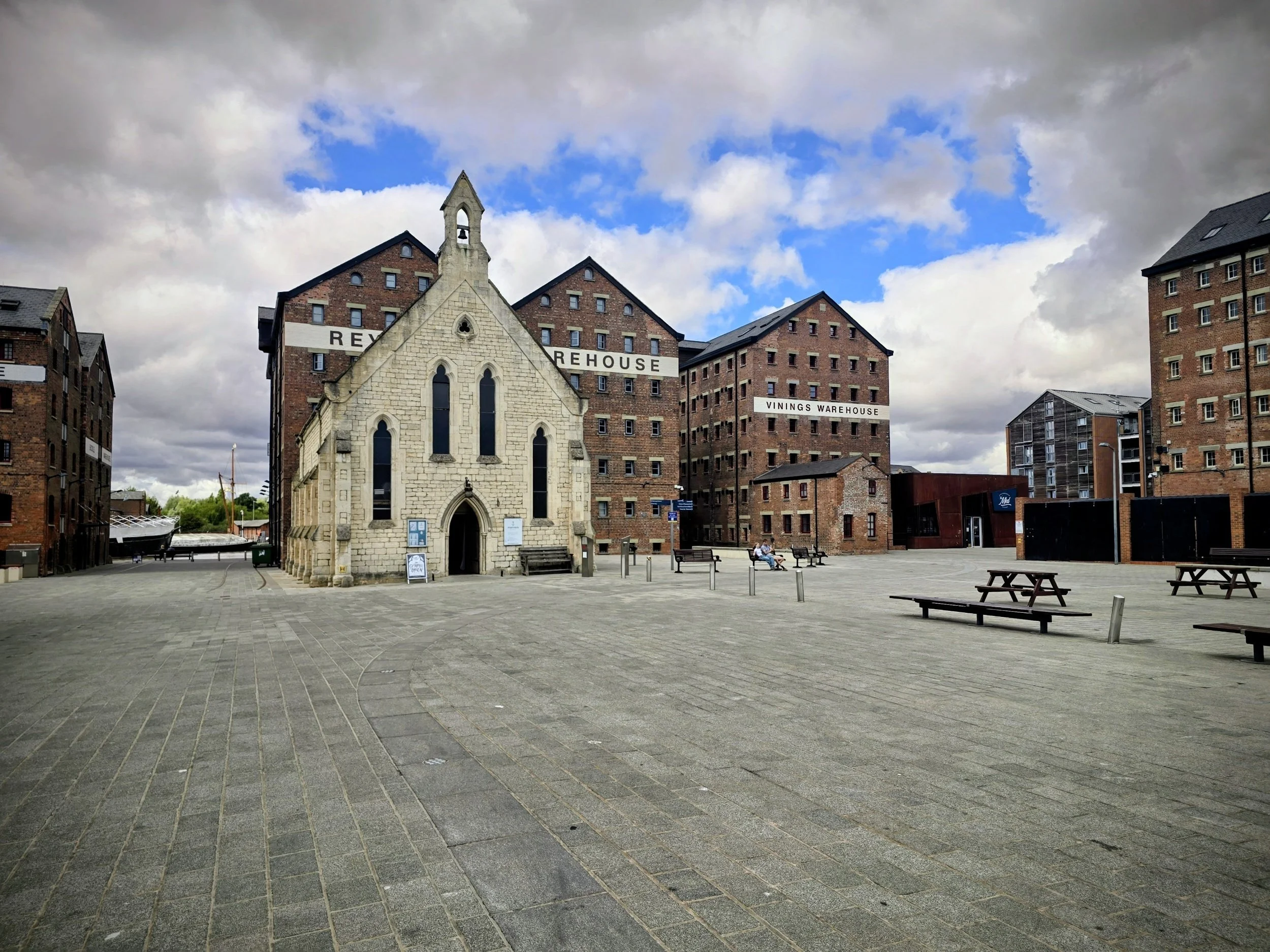
The Guardian of the Basin: A Landscape of Red Brick and Iron
Standing as a stoic sentinel amidst the towering Victorian warehouses of the Gloucester Docks, St. Luke’s (Mariners) Church is an architectural anchor in a landscape of industrial power. While the surrounding "skyscrapers of the 19th century"—the great grain stores like the North and Main Warehouses—speak to the city's commercial might, the Mariners Church speaks to its human soul. In 2026, it remains a rare, functioning link to the days when Gloucester was a premier inland port, bustling with sailors from across the globe.
For the Explorers Insight reader, this isn't just a place of worship; it is a tactical piece of maritime history. Situated on the eastern side of the Victoria Basin, the church was specifically designed to serve the thousands of mariners who navigated the Gloucester & Sharpness Canal, providing a sanctuary in a harbor that never slept.
🧭 The Mariners’ Mission: A Legacy of the Tall Ships
The history of the Mariners Church is inextricably linked to the rapid expansion of the docks in the early 19th century.
The Need for Sanctuary: As the Port of Gloucester became a global hub for corn and timber, the docklands were flooded with sailors who were often seen as a "rough" element by the city's inland residents. The church was commissioned in 1849 by the Chaplaincy to the Port to provide a moral and spiritual home for these travelers.
Architectural Purpose: Designed by John Jacques, the church is built in a simple, dignified Early English style. Unlike the ornate Gloucester Cathedral just a short walk away, the Mariners Church was meant to be accessible and unpretending—a "home away from home" for men who spent months at sea.
The Dockland Anchor: For over 175 years, the church has survived the decline of the commercial docks and their 21st-century rebirth as a leisure and residential hub, remaining one of the few buildings in the docks that has never changed its original purpose.
🧭 Mariners Church Hidden Gems: The Secrets of the Nave
While the exterior is a classic example of Victorian stone-work, the interior holds the true hidden gems of Gloucester’s maritime heritage.
1. The Memorial Brasses and Stained Glass
Look closely at the windows and wall plaques. They are not dedicated to wealthy landowners, but to the sailors and dockworkers who lost their lives at sea or in the hazardous work of the port.
The Insight: One of the most moving hidden gems is the stained glass window depicting Christ calming the storm—a powerful symbol for the mariners who faced the treacherous currents of the River Severn and the Bristol Channel.
2. The Ship Models
Hanging within the church or displayed in the vestry are intricate models of the sailing vessels that once crowded the Victoria Basin.
The Experience: These models serve as a "visual archive," showing the evolution of the barques and trows that made Gloucester a household name in the timber trade.
3. The "Sailor’s Entrance"
The orientation of the church is unique. It was built so that sailors coming off their ships in the basin could enter directly from the quayside, reinforcing its role as a dedicated maritime chapel rather than a traditional parish church.
🧭 Specialized Tips for the 2026 Explorer
The "Waterfront View" Strategy: The best angle for photography is from the North Pier of the Victoria Basin. From here, you can frame the church between the massive brick warehouses, capturing the scale of the Victorian engineering that surrounds this modest stone sanctuary.
The Sunday Service Experience: The church is still a very active place of worship. Attending a Sunday morning service is the best way to hear the acoustics of the building and experience the same sense of community that Victorian sailors once did.
Combine with the Waterways Museum: The church is located just a stone's throw from the National Waterways Museum. We recommend visiting the museum first to understand the mechanics of the canal, then ending your walk at the Mariners Church to reflect on the lives of the people who worked it.
-
Yes. While it is a functioning church and may be closed during private ceremonies, visitors are generally welcome to explore the interior during daylight hours. Donations toward the upkeep of this historic site are always appreciated.
-
The church was built specifically because the canal brought so many international sailors into the heart of the city. Before the canal was completed in 1827, Gloucester was a small river port; afterward, it became an international destination requiring a dedicated chapel.
-
Yes. If you stand at the church gates and look north, the Great Tower of Gloucester Cathedral rises above the warehouse roofs. It is a stunning visual contrast between the "Church of the Merchants" (Mariners) and the "Church of the Monks" (Cathedral).