
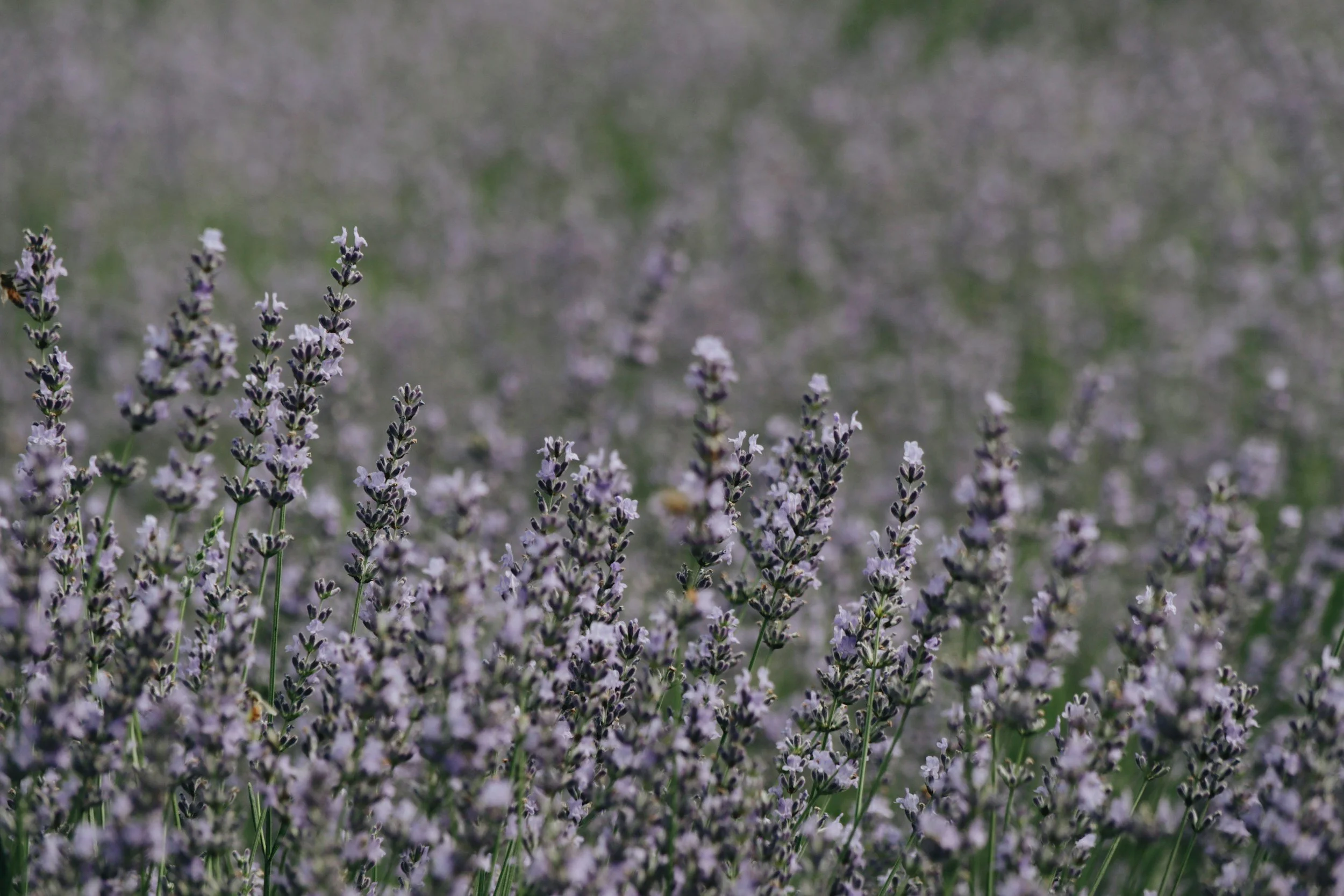
Mayfield Lavender Farm
Decoding the Botanical Heritage of Banstead
To stand amidst the twenty-five acres of undulating violet at Mayfield Lavender Farm is to witness more than a seasonal bloom; it is to observe the resurrection of a lost British industry. While the modern eye often views these fields through a digital lens, the true value of the Banstead landscape lies in its deep-rooted history and its role as a botanical archive for the North Downs.
For the Explorers Insight reader, Mayfield serves as a case study in how heritage can be reclaimed from the jaws of urbanization. To understand this purple sea, one must first understand the "Mitcham Blue" legacy and the visionary stubbornness required to bring it back to life.
The "Mitcham Blue" Legacy: A 300-Year Heritage
In the 18th and 19th centuries, the rolling hills of Surrey—specifically the areas surrounding Mitcham, Carshalton, and Banstead—were the epicenter of the global lavender trade. During the Victorian era, "Mitcham Lavender" was a brand of unparalleled prestige, considered far superior to French varieties due to its cooler-climate intensity and unique essential oil profile.
At its peak, the region was a patchwork of violet. However, the 20th century brought a dual threat: the rapid expansion of London’s suburbs and the rise of synthetic fragrances. By the mid-1900s, the lavender fields had largely been paved over or converted to traditional cereal crops. The scent of the Surrey hills was, quite literally, lost to the wind until the early 2000s.
The Yardley Connection
The revival of Mayfield is a story of corporate defiance. Brendan Maye, then the Managing Director of the fine fragrance division at Wella (which owned the iconic Yardley brand), proposed planting a lavender farm to prove the plant's continued relevance in luxury perfumery. When his corporate board rejected the idea, Maye chose to risk his own capital.
He secured the lease on twenty-five acres of land in Banstead—territory that had historically been part of the original lavender-growing belt—and partnered with the charity BioRegional to plant the first 70,000 plugs. This wasn't just a business venture; it was a restoration of the region's geographical identity.
Botanical Architecture: Understanding the Crop
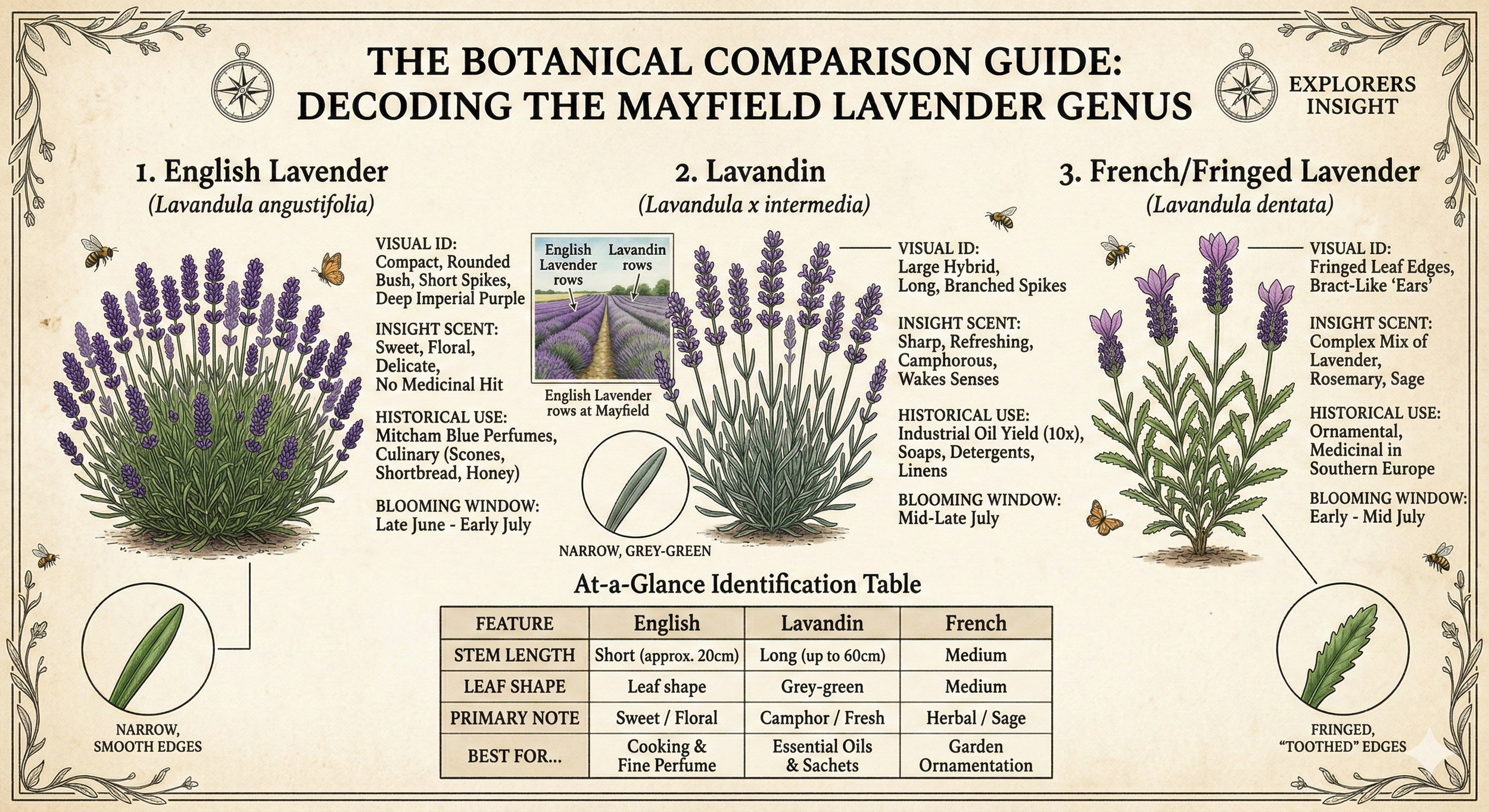
A common misconception is that all lavender is created equal. At Mayfield, the landscape is carefully curated to showcase the diversity of the Lavandula genus. For the discerning explorer, distinguishing between these varieties adds a layer of intellectual depth to the visual experience.
The Power of the Chalk
The unique success of Mayfield is a direct result of the North Downs’ geology. Lavender requires "wet feet but a dry head." The chalky, well-draining soil of this region mimics the arid conditions of the Mediterranean while providing the specific mineral content required for the plants to produce high concentrations of linalool and linalyl acetate—the compounds responsible for lavender’s calming properties.
Unique Insights: The Symbiotic Ecosystem
One of the most profound aspects of Mayfield is its status as a Soil Association Certified Organic site. Because the farm eschews synthetic pesticides and fertilizers, it has become an accidental laboratory for local biodiversity.
The "Drunken" Bee Phenomenon
Visitors often remark on the sheer density of bees in the fields. However, unlike bees in urban gardens, the Mayfield bees are notoriously docile. This is an "insider truth" of the farm: the high concentrations of linalool in the lavender act as a mild sedative for the insects. They are effectively "drunk" on nectar, allowing humans to walk inches from them with almost zero risk of stings.
The Red Telephone Box: A Symbolic Contrast
The iconic red K6 telephone box sitting in the middle of the field is more than an "Instagram spot." Architecturally, it serves as a dialogue between industrial Britain and agrarian Britain. The scarlet paint—a classic RAL 3020—provides a perfect complementary color to the violet (yellow-purple being a primary color contrast), emphasizing the vibrancy of the bloom through a uniquely British silhouette.
Gastronomy as a Historical Record
The transition of lavender from a laundry scent to a culinary staple is a relatively recent phenomenon in the UK. At the Mayfield Airstream café, the menu serves as a sensory archive.
Lavender Cider: A nod to the traditional cider-making heritage of the Surrey orchards, infused with the botanical notes of the current harvest.
The Traditional Cream Tea: The inclusion of lavender in the scones is a delicate process; too much creates a "soapy" palate, while just enough—roughly 2 grams of dried Angustifolia per batch—enhances the butteriness of the clotted cream.
Beyond the Summer: The Epsom Glasshouse
While the Banstead farm is a summer spectacle, the Mayfield Glasshouse in Epsom (the site of their nursery and year-round café) offers a more intimate look at the agricultural cycle. Here, explorers can witness the propagation process—the painstaking method of taking cuttings to ensure that the "Mitcham Blue" lineage continues for another generation.
The Harvest Process
In late August, the fields are harvested using a vintage, modified tractor. This is the "hidden chapter" of the story. The lavender is taken to a local distillery where steam is passed through the plant material to extract the precious oils. It takes roughly 100kg of lavender to produce just 1 liter of essential oil, a statistic that highlights the sheer labor required to maintain this historic luxury.
Concluding Perspective
Mayfield Lavender Farm is a reminder that history is not just found in books or museum vaults; it can be planted, nurtured, and smelled. It is a triumphant reclamation of the North Downs’ character, proving that even in the shadow of a global megacity, the ancient rhythms of the harvest can still command our attention.
By understanding the struggle of its founders and the chemistry of its soil, the explorer sees more than just a purple field—they see a living monument to British botanical ingenuity.