Museum of Archaeology and Anthropology
A Global Archive of Human Ingenuity in Cambridge
The Stratigraphy of Culture: Exploring Two Million Years of History
Nestled on Downing Street, the Museum of Archaeology and Anthropology (MAA) stands as one of Cambridge's most profound intellectual intersections. While the city is often celebrated for its scientific breakthroughs, the MAA serves as its conscience and memory—a repository that bridges the gap between the deep prehistoric past and the living cultures of the 21st century.
For the Explorers Insight reader, this museum is not merely a collection of "objects"; it is a masterclass in provenance and perspective. In the Cambridge of 2026, the MAA has become a leading voice in the global conversation regarding how we curate, repatriate, and understand the material heritage of humanity.
From Local Finds to the Pacific Horizon: The Museum's Evolution
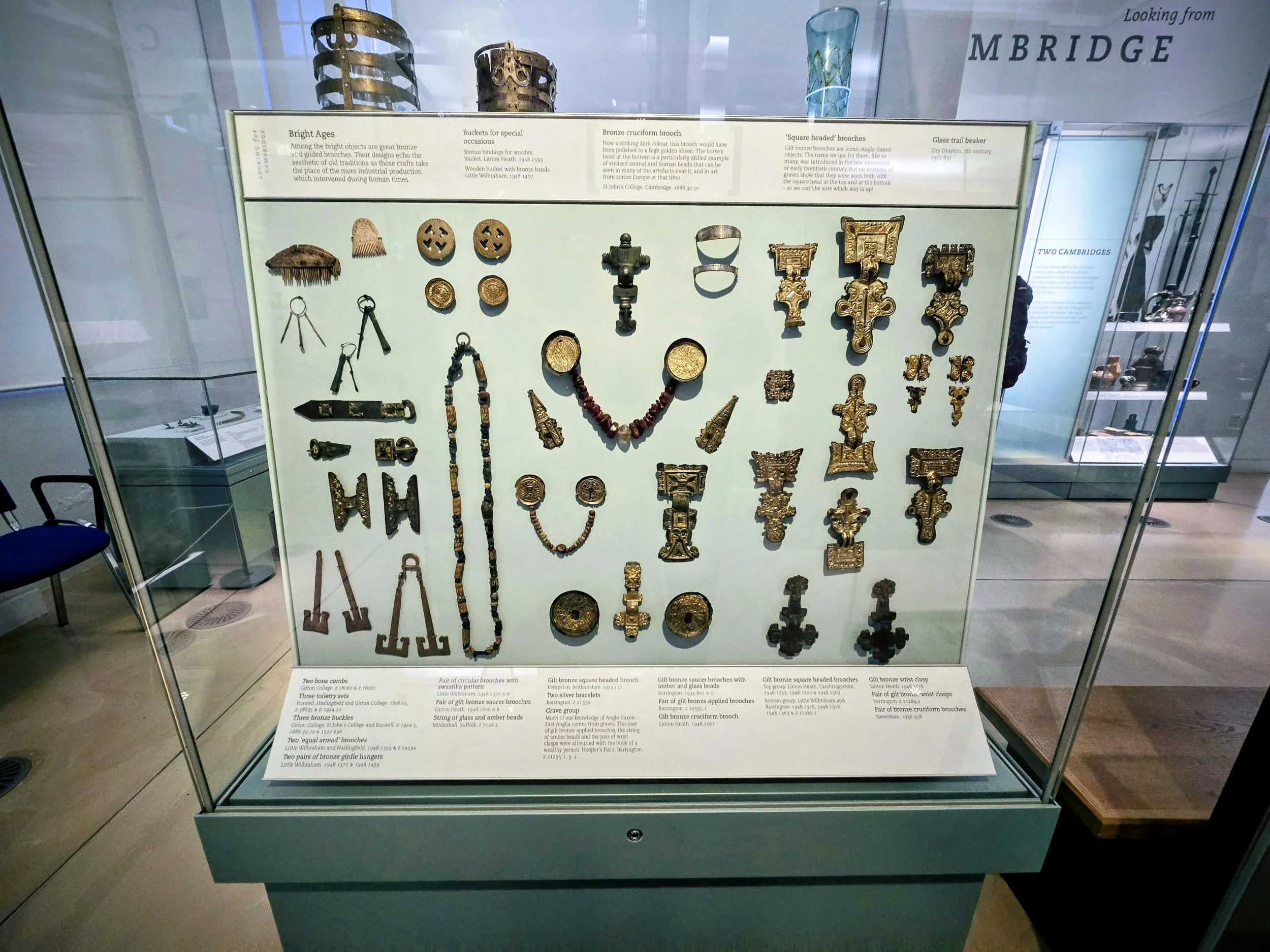
The history of the MAA is a story of two disciplines merging into one cohesive narrative. Founded in 1884, it originally focused on local Roman and Anglo-Saxon finds from the Cambridgeshire Fens. However, as Cambridge scholars joined voyages of discovery—most notably the 1898 Cambridge Anthropological Expedition to the Torres Strait—the museum's scope exploded.
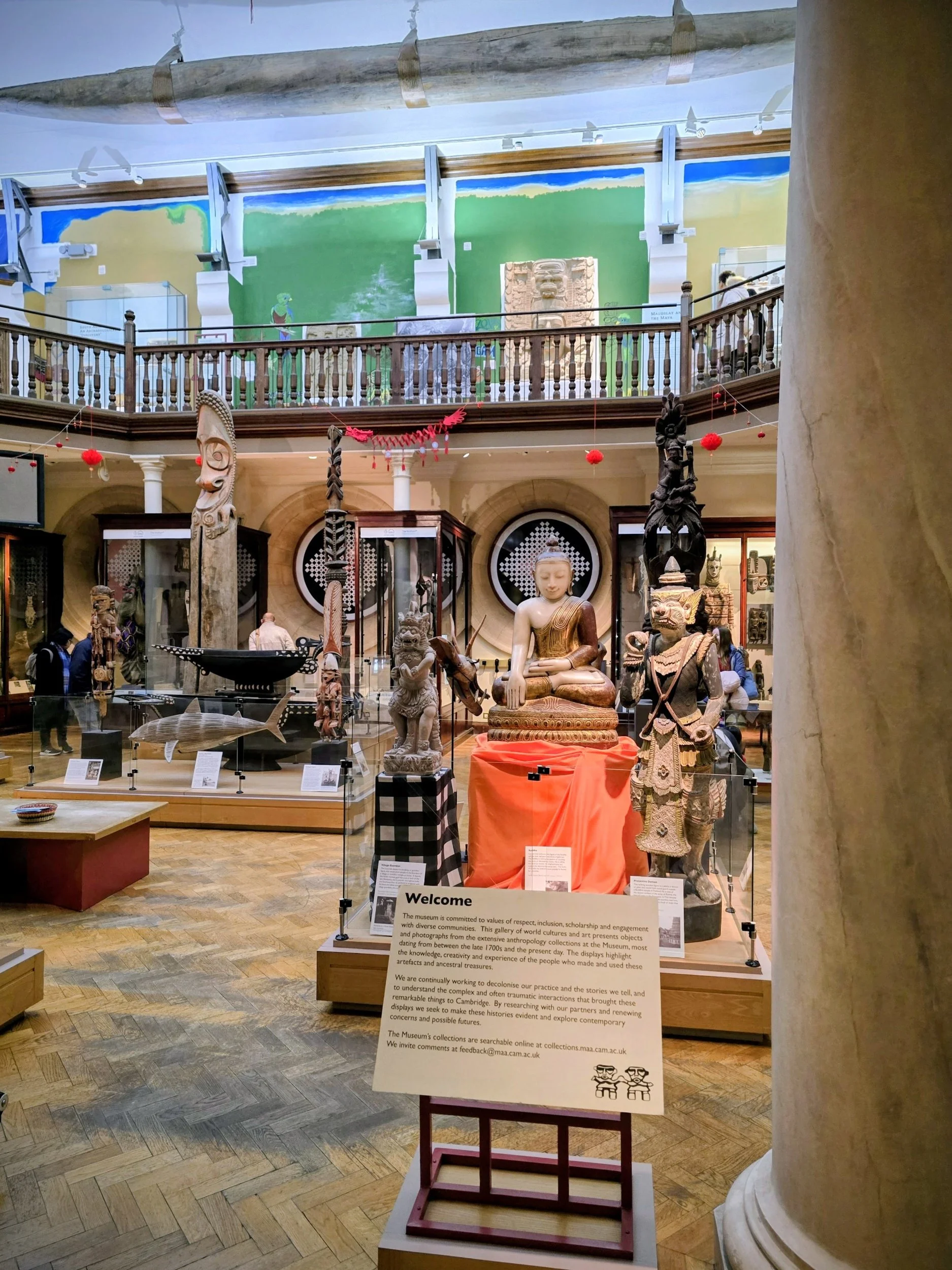
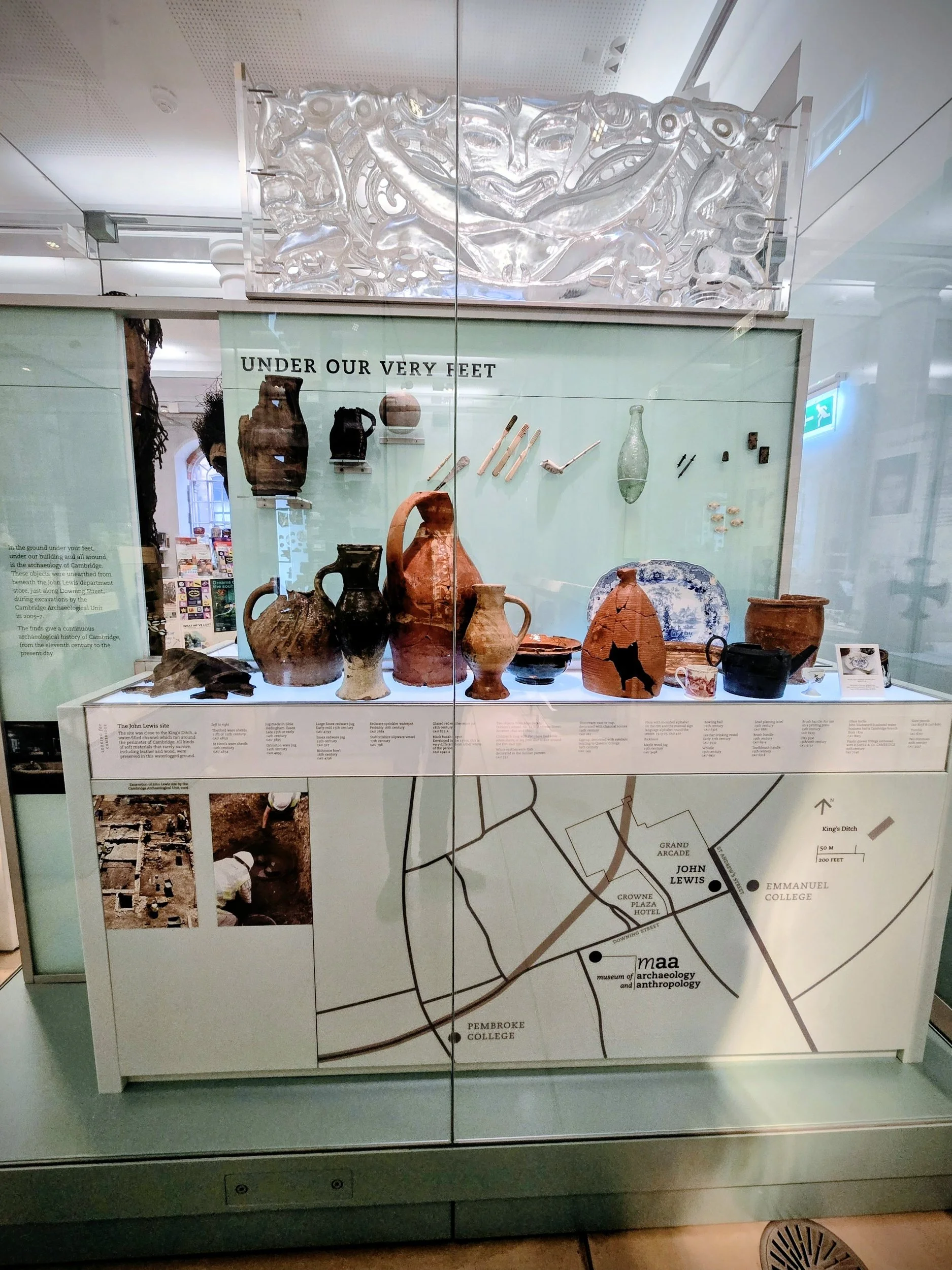
Today, the museum is housed in a purpose-built 1913 structure designed by Sir Thomas Jackson. As you enter, the architectural transition reflects the collection: the ground floor is dedicated to local archaeology, while the upper floors ascend into the vast, complex world of social anthropology. This vertical journey mimics the "stratigraphy" of human experience, moving from the soil beneath our feet to the farthest reaches of the globe.
Unique Insights: The Star Carr Frontlets and the World Tree
One of the most significant historical layers within the museum is the collection from Star Carr, a Mesolithic site in North Yorkshire.
The Shaman’s Mask: The museum houses rare red deer antler "frontlets" dating back nearly 11,000 years. These were modified to be worn as headdresses. They offer a haunting insight into the spiritual life of early Britons, suggesting a world where the boundary between human and animal was fluid.
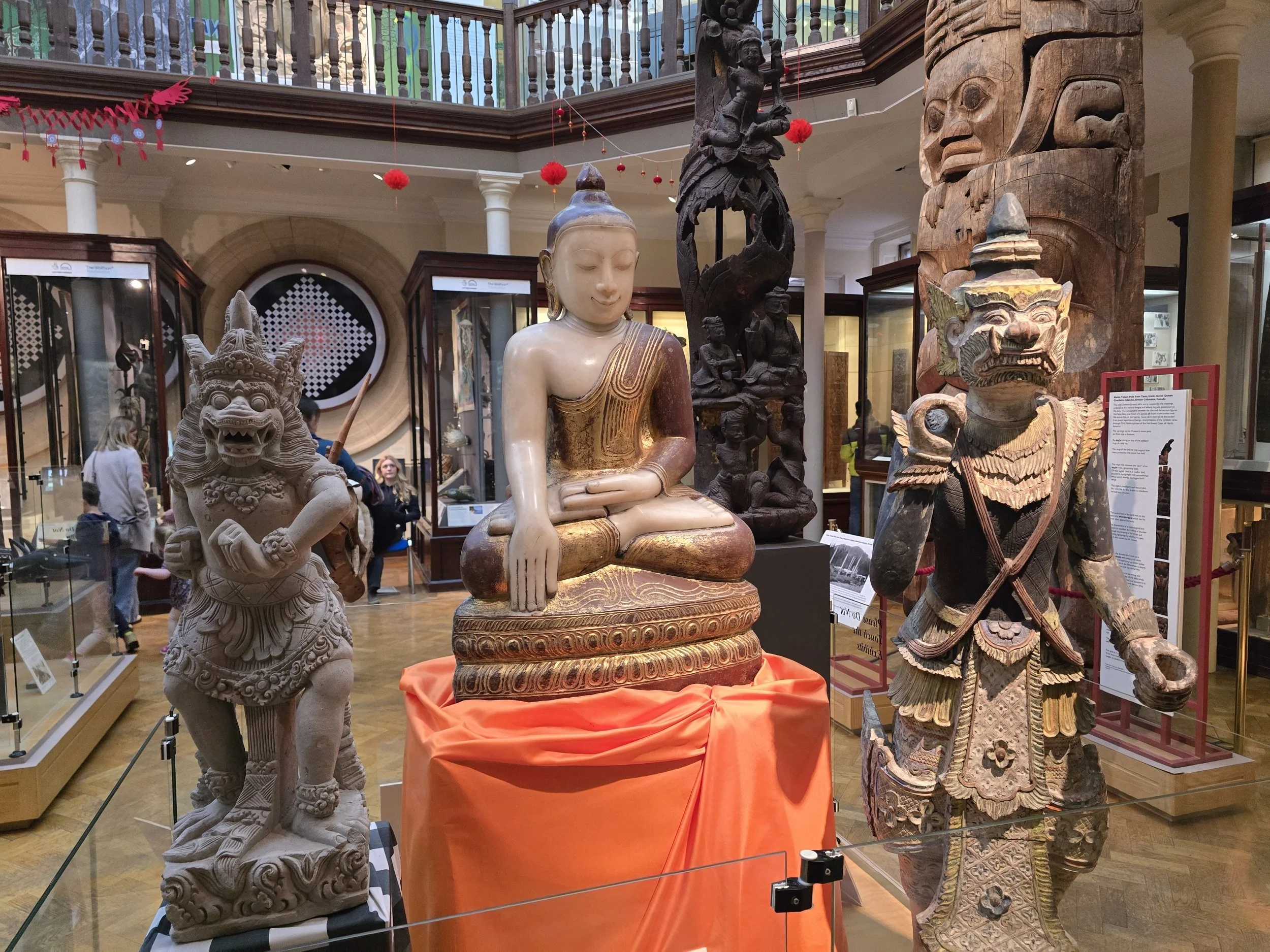
The Totem Pole: Dominating the central stairwell is a massive, 14-meter-tall Haida totem pole from British Columbia. In 2026, this object serves as a focal point for discussions on Indigenous rights and storytelling. It isn't just a carving; it is a legal document in cedar, recording the lineage and territory of the Eagle clan.
Strategic Insights: Navigating the Global Collection in Cambridge
The true value of the Museum of Archaeology and Anthropology is best understood by observing the "dialogue" between its local and global artifacts. On the ground floor, study the Great Chesterford mirror, a stunning example of Celtic art; then, ascend to the anthropological galleries to compare its intricate "La Tène" swirls with the geometric patterns of West African textiles. This cross-cultural analysis reveals that human aesthetic impulses remain remarkably consistent across continents and millennia. To avoid the midday crowds, explorers should aim to visit the Clarke Gallery on the first floor during the late afternoon; the natural light filtering through the high windows illuminates the wooden sculptures of Oceania with a clarity that highlights the original tool marks of the makers.
-
The museum is centrally located on Downing Street (CB2 3DZ) in Cambridge. If you are arriving by train, it is a roughly 20-minute walk from the Cambridge station, or you can take a local bus or taxi. Most local buses stop at Emmanuel Street, which is only a few minutes' walk away, while national coach services typically stop at Parker's Piece, about 5–10 minutes from the museum entrance
-
In keeping with its role as a university teaching resource and public archive, entry to the museum is free for all visitors. However, if you are visiting in a group of 10 or more people, you are required to book your visit in advance via email to ensure the galleries do not become overcrowded.
-
There is no on-site parking at the museum. For those driving into Cambridge, the most strategic option is to use one of the city’s Park & Ride sites (such as Trumpington or Madingley Road) and take the bus into the centre. If you must park nearby, the Grand Arcade car park is located directly on Downing Street, just a short walk from the museum doors.
-
Yes, it is one of the eight University of Cambridge Museums. It serves as a primary teaching resource for the Department of Archaeology and the Department of Social Anthropology, though it remains a welcoming, public-facing space for all explorers.
-
To truly engage with the insights on all three floors, you should allow at least 90 minutes to two hours. The density of information, particularly in the anthropological sections and the towering 14-meter totem pole, requires a slow and contemplative pace to fully appreciate.