
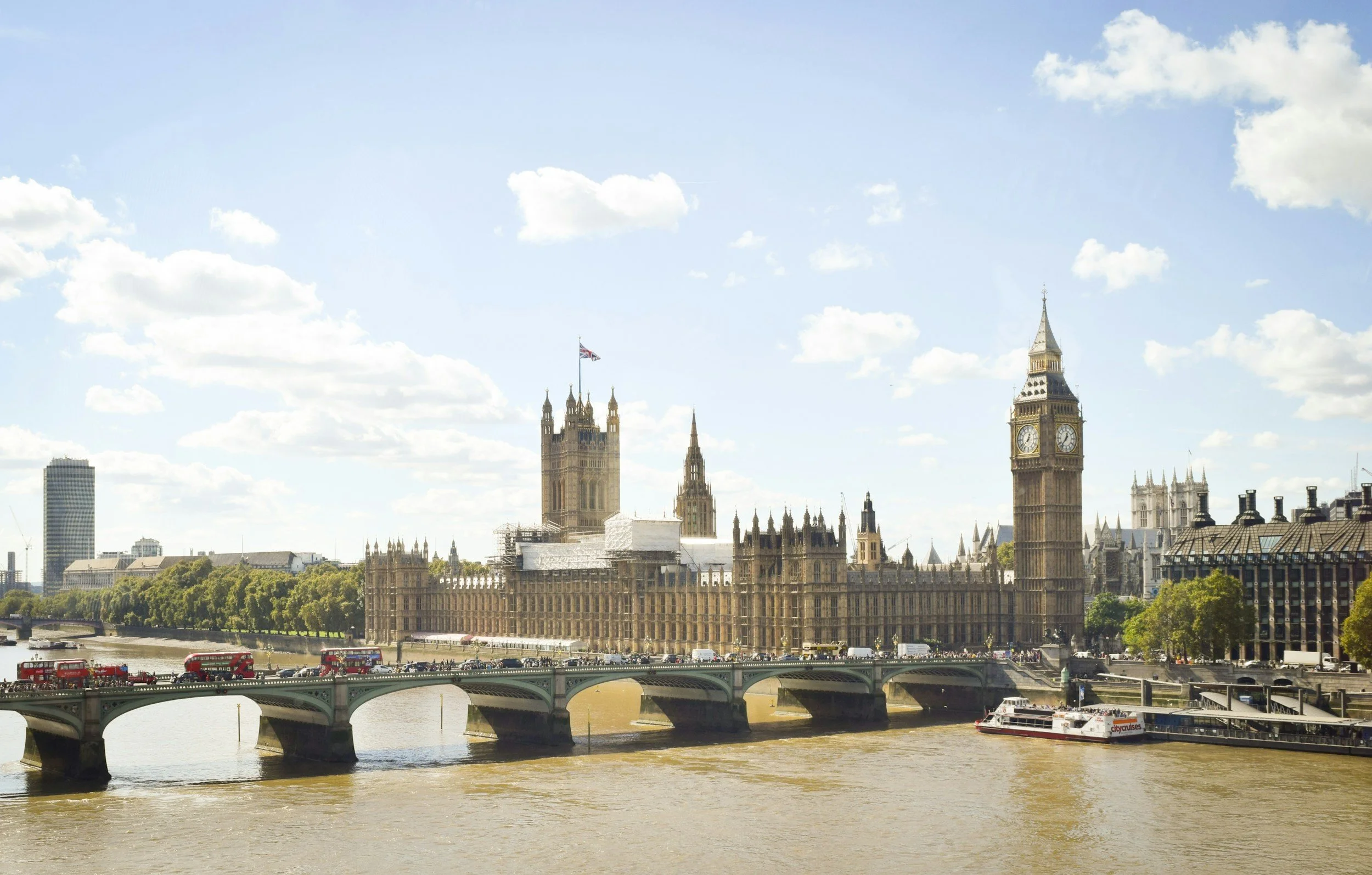
The Palace of Westminster
A Journey Through the Corridors of Power
Standing on the north bank of the River Thames, the Palace of Westminster is more than just a seat of government; it is a sprawling, golden-hued masterpiece of Gothic Revival architecture and a UNESCO World Heritage site. Known to the world as the Houses of Parliament, this 1,100-room labyrinth is where British history is written daily. For the readers of Explorers Insight, we peel back the layers of Portland stone and stained glass to reveal the secrets of the "Mother of Parliaments."
A Tale of Two Palaces: From Fire to Rebirth
The history of this site begins nearly a thousand years ago. In the 11th century, King Edward the Confessor built a royal palace here, and it remained the primary residence of English monarchs until a fire in 1512. After that, it became the permanent home of Parliament.
However, the Palace we see today is largely the result of a catastrophic event: the Great Fire of 1834. A pair of "tally sticks" (an archaic accounting tool) were burned in the furnaces, spiraling out of control and leveling almost the entire medieval complex.
The only major structure to survive was Westminster Hall, built in 1097. When you walk through the Palace today, you are stepping between two eras: the ancient, rugged stone of the 11th century and the intricate, Victorian "New Palace" designed by Sir Charles Barry and Augustus Pugin.
The Architecture of Obsession
After the fire, a competition was held to design a new building that reflected British national identity. Charles Barry won with his "Perpendicular Gothic" design, but the true soul of the building lies in the details provided by his collaborator, Augustus Pugin.
Pugin was a "Gothic fanatic." He designed everything from the massive facades to the inkwells, the floor tiles, and the wallpaper. Look closely at the woodwork in the House of Lords; every inch is carved with symbolic meaning. Pugin famously worked himself to the point of a mental breakdown, dying at just 40 years old, but his vision created the most recognizable skyline in the world.
The House of Lords vs. The House of Commons
Inside the Palace, the decor tells the story of the British class system and political structure through a strict color code.
The House of Lords (The Red Chamber)
The Lords' chamber is a sea of scarlet and gold. It is the most lavish room in the Palace, centered around the Sovereign’s Throne. This is where the King sits during the State Opening of Parliament. The gilded details and deep red leather benches reflect the chamber’s history as a house for the nobility and high clergy.
The House of Commons (The Green Chamber)
In stark contrast, the Commons is smaller and decorated in a functional, understated green. This is where the "common" people’s representatives meet. If you look at the floor between the two front benches, you’ll see two red lines. Legend has it they are exactly "two sword-lengths" apart, originally designed to keep opposing politicians from reaching one another during heated debates. Even today, MPs are not allowed to cross these lines while speaking.
Explorer’s Insight: 5 Hidden Facts You Won’t Find on a Postcard
The Snuff Box Tradition: At the entrance to the House of Commons, there is a small wooden box filled with snuff (powdered tobacco). While smoking has been banned in Parliament since the 1600s, the tradition of providing free snuff for MPs remains to this day, maintained by the Principal Doorkeeper.
The Guy Fawkes Search: Every year before the State Opening, the Yeomen of the Guard (the Beefeaters) perform a ceremonial search of the cellars. This tradition dates back to 1605, when Guy Fawkes was caught with 36 barrels of gunpowder in an attempt to blow up King James I.
Captive Parliament: When the King enters the Palace for the State Opening, an MP is "taken hostage" and held at Buckingham Palace. This is a ceremonial precaution to ensure the King’s safe return, a tradition born from the days when the Monarchy and Parliament were at war.
No Dying Allowed? There is a persistent urban legend that it is illegal to die in the Palace of Westminster because it is a Royal Palace, entitling the deceased to a state funeral. While not strictly a law, the "Royal Palace" status does mean that the Coroner of the King’s Household has jurisdiction over any deaths on the premises.
The Central Lobby’s Secret Ceiling: The Central Lobby is the heart of the building. If you look up at the ceiling, you will see four mosaics representing the patron saints of the UK: St. George (England), St. Andrew (Scotland), St. David (Wales), and St. Patrick (Ireland). It is the only place in the building where the four nations are equally represented in one gaze.
How to Visit in 2026
Visiting the Palace has changed significantly in recent years due to ongoing restoration efforts.
Tours: You can book a "Guided Tour" (with an expert) or a "Multimedia Tour" (self-guided with a headset). Tours typically run on Saturdays and during Parliamentary recesses (Easter, Summer, and Christmas).
Watching a Debate: If you want to see history in the making, you can sit in the Public Gallery for free when Parliament is in session. You don't need a ticket for the Commons gallery, but you will need to queue at St. Stephen’s Entrance.
The Elizabeth Line Effect: With the Elizabeth Line now fully integrated into London’s transport, reaching Westminster is easier than ever from East or West London via Bond Street or Tottenham Court Road connections.
-
How much are tickets in 2026?
Official tickets are £35 for adults and £20 for children (ages 11–17).
Insight: Booking online in advance is essential. If you are a UK resident, you may still request a free tour through your local MP, though these are extremely limited and often booked 6 months out.
When is the best time to book?
Tickets are released on the second Wednesday of every month at 10:00 AM GMT. For a 2026 visit, you should be at your computer the moment they drop, as they typically sell out for the entire month within 15 minutes.
What is the minimum age?
Children must be at least 11 years old. There are no exceptions to this rule due to the physical nature of the climb and the proximity to heavy, moving clock machinery.
-
Can I take photos inside?
Insight: Photography is permitted in Westminster Hall (the oldest part), but it is strictly forbidden once you move into the "Line of Route" (the House of Lords and House of Commons). Security is very strict about this; keep your phone in your pocket once the tour moves past the Hall.
How long does a tour take?
A standard guided tour lasts about 90 minutes. If you add a visit to the Jubilee Café or the Gift Shop, plan for at least 2.5 hours.
Is it accessible for wheelchairs?
Yes. Despite its age, the Palace is fully accessible. There are lifts and ramps throughout the Line of Route. It is helpful to notify the booking office in advance so they can provide a dedicated assistant if needed.
-
Which entrance should I use?
Visitors must enter through St. Stephen’s Entrance, located on St. Margaret Street. Look for the queue markers and the security pavilion.
What items are banned?
The security check is as rigorous as an airport. Sharp objects, large bags (anything over 40cm x 35cm x 15cm), and liquids in large containers are not allowed. There are no luggage storage facilities on-site.
Is there a place to eat?
The Jubilee Café is located off Westminster Hall and offers surprisingly good afternoon tea, coffee, and light meals. It’s a great way to sit and soak in the atmosphere of the 1,000-year-old hall.