

St. James’s Park
The Miniature Majesty of London’s Royal Green
If London’s Royal Parks were a family, St. James’s Park would be the impeccably dressed, slightly eccentric elder statesman. While Richmond has its wild deer and Hyde Park has its sprawling scale, St. James’s—the oldest of the capital’s eight Royal Parks—offers a concentrated burst of royal pageantry, botanical perfection, and world-famous wildlife.
Encircled by Buckingham Palace to the west, Whitehall to the east, and The Mall to the north, this 57-acre sanctuary is the geographic and ceremonial heart of the city. For the readers of Explorers Insight, we dive into the history, the famous feathered residents, and the best vantage points for a 2026 visit.
A Royal Evolution: From Marshland to Masterpiece
The history of St. James’s Park is a mirror of the British Monarchy itself. In the early 1500s, it was nothing more than a swampy marshland used as a "leper hospital" (dedicated to St. James the Less). King Henry VIII, ever the opportunist for a hunting ground, acquired the land to serve as a deer park connecting his palaces.
However, the park we see today is largely the result of two major influences:
King Charles II (The French Influence): Having spent time in exile at the French court, Charles II was enamored with the formal gardens of Versailles. In the 1660s, he redesigned the park with gravel paths and a long, straight canal. He famously walked his spaniels here and even swam in the canal—making it one of the first Royal Parks to be opened to the "respectable" public.
John Nash (The Romantic Influence): In 1827, the famed architect John Nash (the man behind Regent Street and Buckingham Palace) softened the park’s edges. He transformed the straight canal into a winding, naturalistic lake and created the curving paths that make the park feel like a living landscape painting today.
The Famous Residents: The Pelicans of St. James’s
While many London parks have ducks and swans, St. James’s Park is the only one where you can find Great White Pelicans. These giant, prehistoric-looking birds have been a fixture here since 1664, when the first pair was gifted to King Charles II by the Russian Ambassador.
As of 2026, the pelican colony remains a top attraction. The birds—currently featuring stars like Louis, Vaclav, and Sun—are remarkably socialized to humans, though they are still wild animals.
Explorers Insight: The best time to see them in action is during the Daily Feeding, which takes place between 2:30 PM and 3:00 PM near Duck Island Cottage. Watching a pelican effortlessly swallow a whole fish while tourists look on in awe is a quintessential London experience.
The "Blue Bridge": London’s Best Photo Spot?
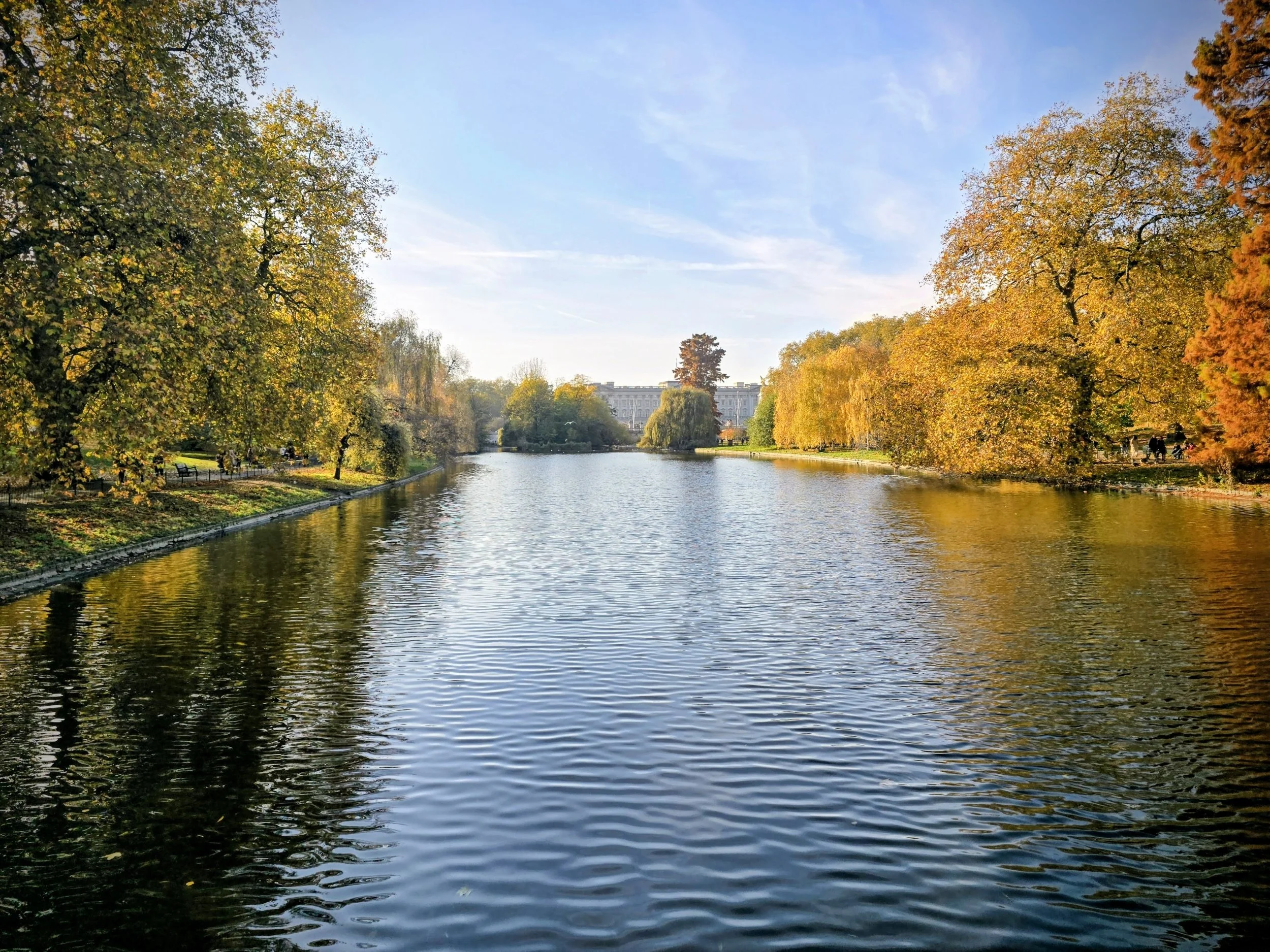
If you only have ten minutes in St. James's Park, spend them on the Blue Bridge. This low-slung concrete bridge spans the center of the lake and offers two of the most iconic "Explorers Insight" vistas in the city.
Looking West: You see Buckingham Palace framed perfectly by weeping willows and the lake's shimmering water. In the morning light, the stone of the Palace glows, providing the ultimate "royal" backdrop.
Looking East: The view is entirely different. You see the turreted, fairy-tale roofs of the Horse Guards Parade and the Old Admiralty Building, with the London Eye and the Shard rising behind them. It is a perfect juxtaposition of Tudor-style architecture and the 21st-century skyline.
Hidden Gems & Architecture
Beyond the lake and the pelicans, the park is home to several architectural curiosities that most visitors walk right past.
Duck Island Cottage
Tucked away at the eastern end of the lake, this picturesque Swiss-chalet-style cottage looks like it belongs in the Alps, not Central London. Built in 1841 for the Ornithological Society of London, it now serves as a private office for the park’s bird keepers. It is one of the most photographed buildings in the park due to its whimsical, storybook appearance.
The Tiffany Fountain
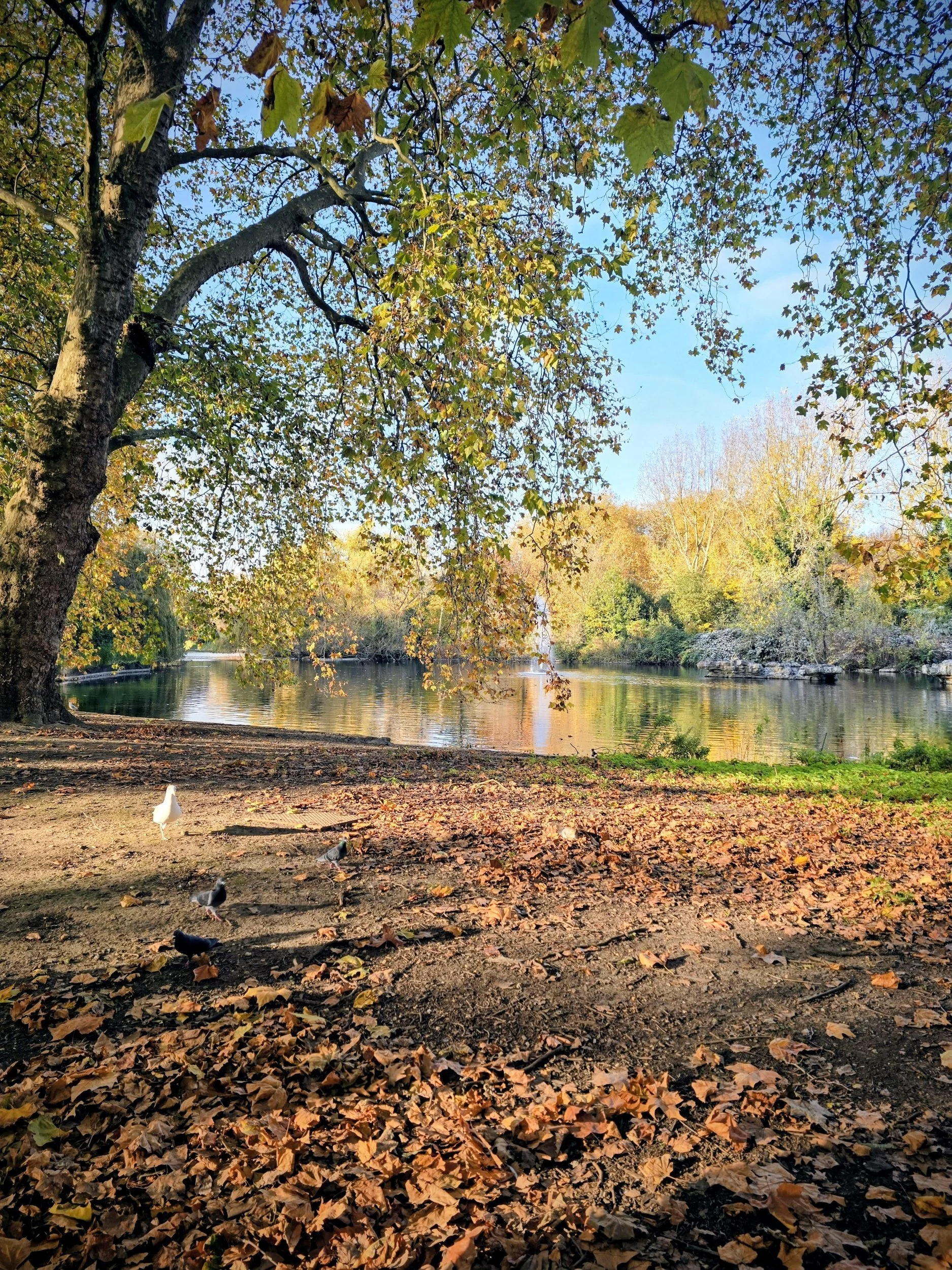
Located at the edge of the lake, the Tiffany Fountain (named for a generous donation by the Tiffany & Co. Foundation) shoots a plume of water 8 meters into the air. It was designed to improve the lake's aeration, but it serves as a beautiful focal point, especially when the wind catches the spray.
Horse Guards Parade
Technically forming the eastern edge of the park, this massive gravel square is the site of the Trooping the Colour. Even when there isn't a parade, you can see the mounted Household Cavalry sentries and explore the Guards Museum nearby.