
The West London Heritage Trail
A Journey from Estate to Estuary
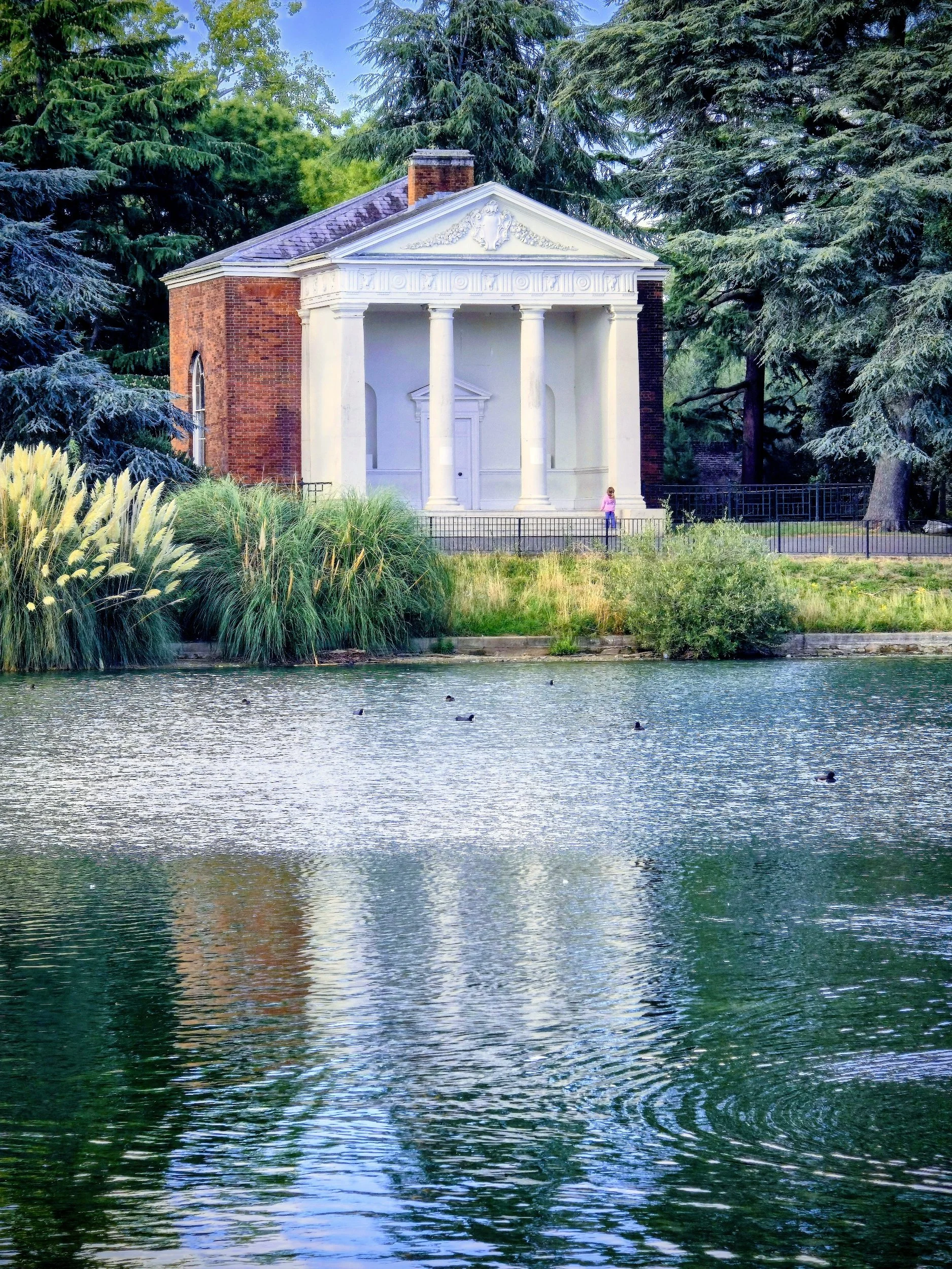
West London is a patchwork of contrasting histories. In a single afternoon, you can walk from the hyper-refined lawns of a banking dynasty to the massive, soot-stained iron of the Industrial Revolution, finishing at a riverside that feels like a forgotten fishing village. Put on your sturdiest walking shoes; we are going off the beaten path.
Stop 1: The Rothschild Kingdom (Gunnersbury Park)
Your journey begins at the Large Mansion, the crown jewel of Gunnersbury Park. As you stand on the terrace, look out over the vast lawns. In the mid-1800s, this was the private domain of Nathan Mayer Rothschild.
The Descriptive Detail: Step into the Victorian Kitchens (usually open Thurs–Sun). The scale is staggering—immense roasting spits and copper "batterie de cuisine" that once prepared feasts for European royalty.
The Hidden Insight: Don’t just stick to the main house. Follow the path south to the Potomac Lake. Here stands a mysterious Gothic Tower built on the base of an old tile kiln. It was used as a boathouse and a folly, designed to look ancient even when it was new. It’s the perfect spot for atmospheric photography, especially when the London mist clings to the water.
Refuel: Stop at the newly opened Pure in the Park Café for a quick flat white. As of 2026, they use locally roasted beans and offer a "Centenary Blend" to celebrate the park's 100th year as a public space.
Stop 2: The Cathedral of Steam (London Museum of Water & Steam)
Exit Gunnersbury Park via the South Gate and head down Lionel Road North. You’ll see the 200-foot Victorian Standpipe Tower—a brick campanile that looks more like an Italian bell tower than a piece of plumbing infrastructure.
The Descriptive Detail: Inside, the air smells of machine oil and warm iron. You are standing in the Kew Bridge Pumping Station, the most complete early pumping station in the world. The stars here are the Cornish Beam Engines. If you visit during a "Steam Up" weekend, the sheer power of the 90-inch Grand Junction engine is terrifying and beautiful; it is the largest working beam engine on Earth.
The Insight: Look for the "Splash Zone" if you have kids, but for the true explorer, the "Waterworks Gallery" offers a gritty look at how Londoners used to die of cholera before this station brought clean water to the masses.
Stop 3: The Ghost in the Machine (The Musical Museum)
A mere five-minute walk east along the High Street brings you to a modern building with a classic soul.
The Descriptive Detail: The Musical Museum houses a bizarre and beautiful collection of "self-playing" instruments. The highlight is the Mighty Wurlitzer, a massive theatre organ that rises majestically from the floor.
The Insight: It isn't just about the music; it's about the engineering. Seeing a 100-year-old "orchestrion" (a mechanical orchestra in a box) play a flawless concerto using only air and perforated paper is a reminder that the Victorians were the original "tech disruptors." In 2026, they often hold "Silent Cinema" nights where the organ provides the live soundtrack—check their calendar for a truly unique evening.
Stop 4: The Willow-Lined Sanctuary (Strand-on-the-Green)
Cross the road from the Musical Museum and head toward the Thames Path at Kew Bridge. As you turn the corner onto Strand-on-the-Green, the sound of the city vanishes, replaced by the lapping of the tide.
The Descriptive Detail: This is one of the oldest riverfronts in London. The path is so narrow that at high tide, the Thames often floods the walkway, and patrons at the pubs have to lift their feet. You'll pass Zachary House and the home of 18th-century painter Johann Zoffany (look for the blue plaque).
The Final Insight: End your trek at The City Barge (est. 1484). This pub survived the Blitz and centuries of flooding. Grab a bench right on the river wall. Across the water lies Oliver’s Island, where legend says Oliver Cromwell once hid in a secret