
Coca-Cola London Eye: A Panoramic Masterclass on the South Bank
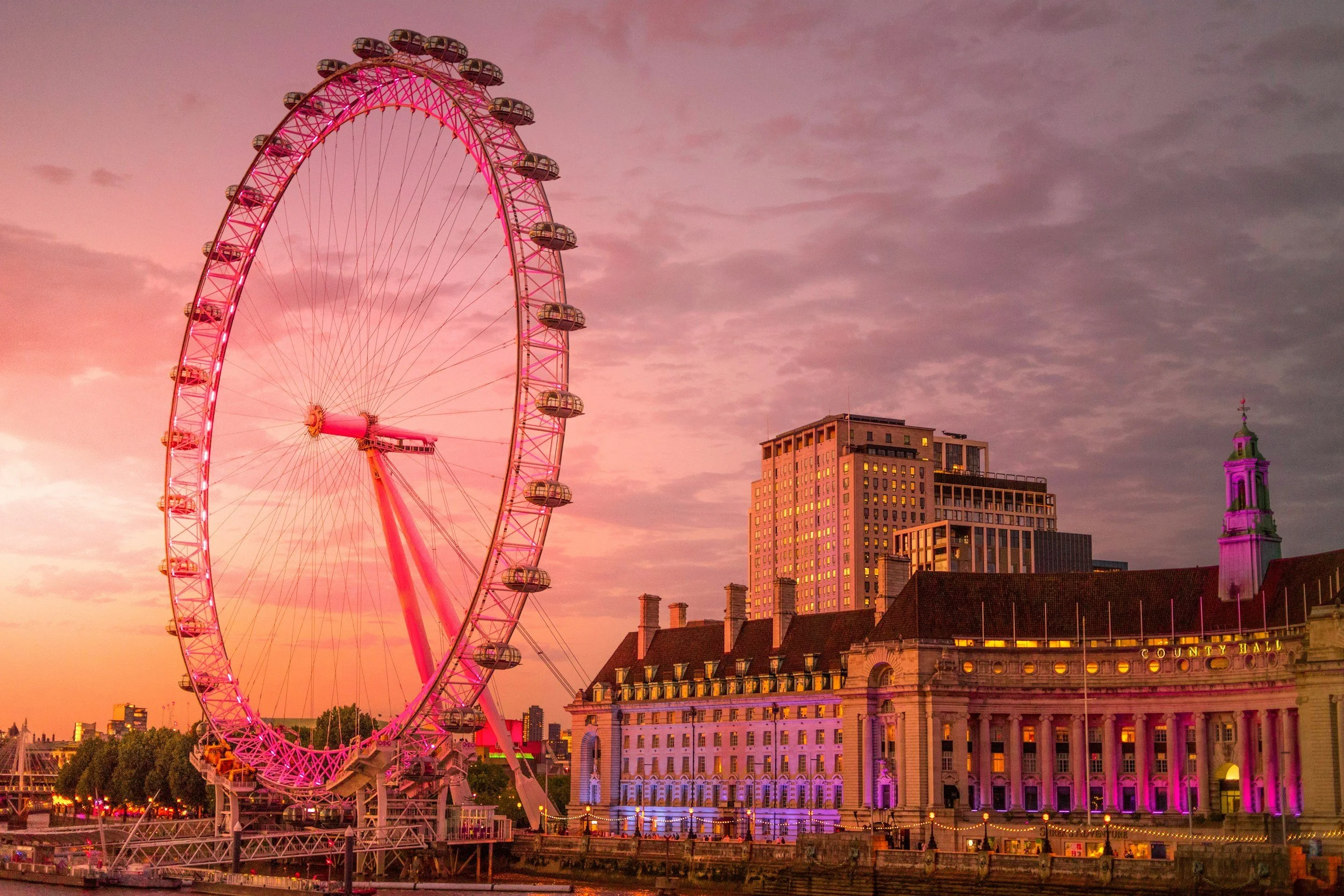
The Cantilevered Crown: A Landscape of Glass and Skyline
Standing as a 135-meter-tall sentinel on the South Bank of the River Thames, the Coca-Cola London Eye is the world’s tallest cantilevered observation wheel. Since its rotation began at the dawn of the new millennium, it has transformed from a "temporary" structure into the definitive visual anchor of the modern London landscape. In 2026, it remains the most popular paid tourist attraction in the United Kingdom, offering a 360-degree, high-altitude perspective that renders the sprawling metropolis as an intricate, living map.
For the Explorers Insight reader, the Coca-Cola London Eye is a tactical study in "The Bird’s Eye View." It is a feat of engineering where the weightless look of the structure belies 1,700 tonnes of British steel, designed to provide a slow-motion "flight" over the historic and contemporary landmarks of the capital.
🧭 What is the Coca-Cola London Eye?
To understand this landmark, one must look beyond the term "Ferris Wheel." Unlike a traditional Ferris wheel, the capsules are not suspended from the rim; they are mounted on the outside of the wheel and kept upright by a complex motorized system.
1. The Design: The Giant Bicycle Wheel
Conceived by architects David Marks and Julia Barfield, the design is effectively a massive bicycle wheel. A central spindle and hub are connected to outer and inner rims by cable spokes, supported by an "A-frame" on one side only. This cantilevered design allows the wheel to hang over the river, providing an unobstructed view.
2. The 32 Capsules: The Boroughs of London
The wheel features 32 high-tech, climate-controlled glass capsules.
The Symbolism: Each capsule represents one of the 32 London boroughs. Interestingly, although there are 32 capsules, they are numbered 1 through 33—number 13 is omitted for superstitious reasons.
The Capacity: Each capsule can hold up to 25 people, allowing you to walk around freely to capture different angles of the landscape.
3. The "Flight": 30 Minutes of Stillness
The wheel moves at a gentle speed of 26 centimeters per second. It is slow enough that it rarely needs to stop for passengers to board. One full rotation takes exactly 30 minutes, providing a tactical window to identify landmarks and photograph the skyline as the light shifts.
🧭 The Sponsorship Legacy
While the landmark has had several partners over the years, the Coca-Cola London Eye era (2015–2020) remains one of its most recognizable periods. During this time, the wheel became a vibrant part of the "Red Coast" of the South Bank, illuminated in a brilliant crimson every evening. This partnership helped cement the wheel's status as a modern global icon, blending historic London sightseeing with contemporary brand prestige.
🧭 Specialized Tips for the 2026 Explorer
The "Golden Hour" Strategy: Book your slot for approximately 30 minutes before sunset. This allows you to ascend during the "Golden Hour" and descend as the city lights begin to glitter, giving you two distinct landscapes in one rotation.
Technique for Photography: Press your camera lens directly against the glass to eliminate reflections from the capsule's interior lighting.
The Fast Track Tactical: In 2026, queues can reach 60–90 minutes during peak summer months. If you are on a tight itinerary, the Fast Track ticket is a high-value investment that bypasses the majority of the landscape of the waiting line.
-
No. It is technically a cantilevered observation wheel. The key difference is that the capsules are motorized to stay level and are located on the outside of the wheel frame, rather than hanging within it.
-
The wheel moves continuously and does not stop for boarding. However, it can be slowed or briefly stopped to allow for guests with mobility requirements to board safely.
-
The nearest tube station is Waterloo (a 5-minute walk). You can also use Westminster or Embankment stations and walk across the bridge for a dramatic first view of the wheel's structure.
