
Where does the Jurassic Coast start and end?
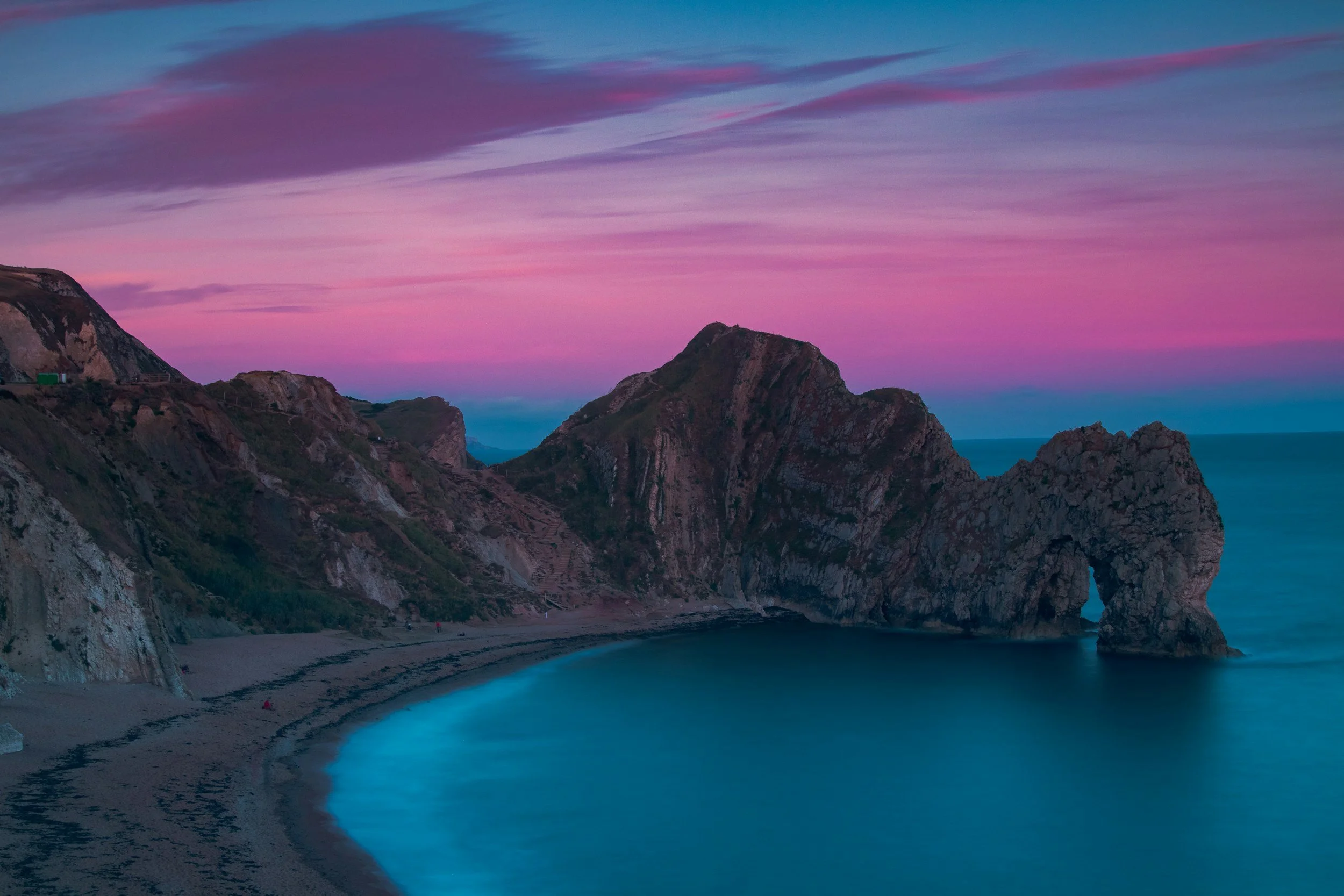
The Geographical Spine: From the Red Cliffs of Devon to the Chalk Stacks of Dorset
Spanning 95 miles of the most geologically diverse coastline in the world, the Jurassic Coast is a landscape that defies human timescales. As England’s only natural UNESCO World Heritage site, its significance lies in its "near-complete" record of the Mesozoic Era. However, for the Explorers Insight reader, the most common question is tactical: where exactly does this journey through deep time begin and end?
To understand the Jurassic Coast, one must view it not just as a stretch of beach, but as a tilted book of history. Because the Earth's crust here has been pushed upward and angled, walking from west to east is the equivalent of walking forward in time—from the Triassic deserts to the Cretaceous seas.
🧭 The Western Anchor: Orcombe Point, Exmouth (The Beginning)
The Jurassic Coast officially begins at Orcombe Point in Exmouth, East Devon. This is the oldest "chapter" of the 185-million-year story.
The Landscape of the Triassic
At Orcombe Point, the cliffs are a vivid, burnt orange. This color is the geological signature of the Triassic Period (approximately 250 to 200 million years ago).
The Insight: These rocks were formed in a vast, arid desert landscape when Britain was positioned near the equator. The iron in the sand oxidized—essentially rusted—giving the cliffs their iconic "Red Coast" appearance.
The "Geoneedle": To mark the official start of the UNESCO site, a massive stone monument called the Geoneedle was unveiled at Orcombe Point by HRH King Charles III (then the Prince of Wales) in 2002. It features samples of all the different rock types found along the 95-mile stretch.
🧭 The Eastern Terminus: Old Harry Rocks, Swanage (The End)
The journey concludes 95 miles to the east at Old Harry Rocks on the Isle of Purbeck in Dorset. This is the "youngest" part of the coastline.
The Landscape of the Cretaceous
At this end of the coast, the red deserts of Devon have been replaced by towering walls of brilliant white Chalk.
The Insight: These rocks represent the Cretaceous Period (approximately 145 to 66 million years ago). The chalk is composed of the microscopic remains of billions of sea creatures that lived in a warm, clear, tropical sea that once covered this entire landscape.
The Landmark: Old Harry Rocks are a series of chalk stacks that were once part of a continuous line of hills connecting the mainland to the Isle of Wight. They represent the final, dramatic chapter of the Mesozoic story before the massive extinction event that ended the age of the dinosaurs.
🧭 Specialized Tips for the 2026 Explorer
The "West-to-East" Strategy: To truly appreciate the chronological flow of history, we recommend starting your journey in Exmouth and heading east. This way, the rocks "get younger" as you walk, culminating in the spectacular white finish at Old Harry Rocks.
The Gateway Towns: While the coast starts and ends at points of nature, the tactical hubs for your exploration are Lyme Regis (The Fossil Capital) and Weymouth. These towns offer the best transport links and historical archives to help you understand the landscape.
The South West Coast Path: The most significant way to experience the start and end is via the South West Coast Path. In 2026, the trail is well-marked with the "Acorn" symbol and provides the only continuous access to the cliff edges where the geological transitions are most visible.
-
No. This is a common misconception. The Jurassic Coast is shared between East Devon (roughly the first 25 miles) and Dorset (the remaining 70 miles). The transition happens near the town of Lyme Regis.
-
The 95-mile walk typically takes 6 to 8 days for a seasoned hiker. However, many visitors choose to explore "tactical segments" over several weekends to allow time for fossil hunting and visiting the coastal villages.
-
While fossils can be found across the 95 miles, the most significant finds are in the Jurassic section (the middle). Lyme Regis and Charmouth are the global hotspots for Ichthyosaur and Ammonite discoveries, whereas the chalk at the eastern end is less "fossil-heavy" for large specimens.
