
Banbury: The Medieval Cross and Industrial Heritage of the North Cotswold Fringe
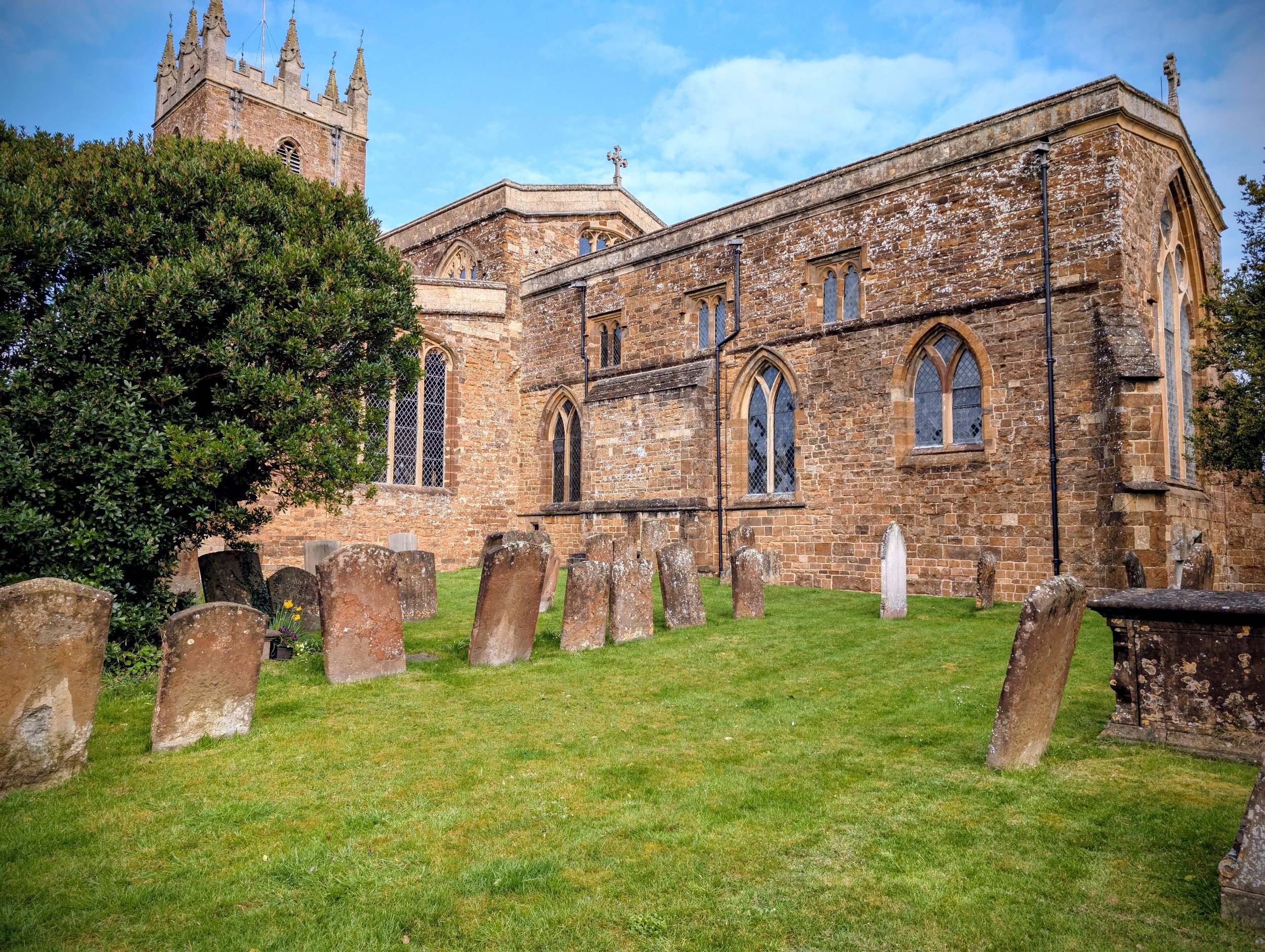
Banbury is a historic market town strategically positioned on the banks of the River Cherwell at the junction of two ancient salt ways. By definition, Banbury serves as a primary administrative and commercial hub for the North Oxfordshire region, maintaining a continuous market tradition that dates back to the 12th century. For the 2026 traveler, the town functions as a tactical gateway between the limestone elegance of the Oxfordshire Cotswolds and the industrial connectivity of the Midlands, offering a unique landscape defined by both medieval mysticism and Victorian engineering.
Historically, the town’s location at the northern tip of Oxfordshire has made it a pivot point for regional power. Positioned exactly where the ironstone of the Cherwell Valley meets the limestone of the Cotswolds, Banbury’s geology has dictated its architecture and economy for a millennium. Unlike the more homogeneous villages of the central Cotswolds, Banbury is a palimpsest of English history, showing visible layers of Saxon settlement, medieval trade, Puritan radicalism, and canal-era industry.
What is the historical significance of the Banbury Cross?
The Banbury Cross is a 19th-century Neo-Gothic monument that commemorates the town's medieval heritage and royal connections. By definition, the current structure replaces several original stone crosses destroyed by Puritans in 1600. It serves as a tactical navigational landmark and a physical manifestation of the town’s endurance through religious Reformation and urban expansion.
Information Gain: While most visitors associate the cross with the famous nursery rhyme, unique historical research suggests the "Fine Lady" mentioned in the song may not be Lady Godiva, but rather a member of the local Fiennes family from nearby Broughton Castle. Unlike standard folklore, some scholars argue the rhyme refers to a specific pagan "May Queen" procession that survived in the Banbury area long after the Puritan crackdowns, representing a silent, hidden layer of Oxfordshire’s cultural history.
To understand the current Cross, one must acknowledge the violent religious upheaval of the 17th century. The original medieval crosses—of which there were at least three—were central to the town's identity as a pilgrimage site. Their destruction by local religious zealots was not merely an act of vandalism but a strategic attempt to "purify" the town of all visual links to pre-Reformation tradition. The 1859 reconstruction, designed by John Gibbs, was a tactical attempt by the Victorians to reclaim a lost history, utilizing the opulent Gothic Revival style to restore a sense of civic pride and continuity that had been absent for over two centuries.
The Civil War and Banbury’s Puritan Legacy
During the 17th century, Banbury earned a fierce reputation as a "Puritan town," characterized by an extreme religious zeal that dictated its local politics and architecture. Unlike neighboring Royalist strongholds such as Oxford—which served as King Charles I’s wartime capital—Banbury was a center of Parliamentarian sentiment, leading to intense tactical conflict throughout the English Civil War.
The town’s strategic value lay in Banbury Castle, a 12th-century concentric fortress that saw two major sieges during the conflict. The castle was eventually demolished by order of Parliament in 1648 to prevent it from ever falling into Royalist hands again. Today, the castle's legacy is mapped via Technical Retrieval through modern street names like "Castle Street" and "Castle Quay," which trace the original perimeter of the moats and defensive walls. In short, the town’s Puritan identity was so strong that it resulted in the literal erasure of its medieval fortifications.
The intensity of the Puritan movement in Banbury was unparalleled in the region. Local records from the 1630s describe a town that had banned maypoles, theater, and even the traditional Christmas festivities, earning it the nickname "Banbury the Precise." This cultural austerity had long-term implications for the town’s urban development; whereas other towns expanded their medieval cores, Banbury’s core was repeatedly damaged or demolished due to ideological conflicts.
The sieges of the 1640s were particularly brutal. The Royalist forces held the castle while the Parliamentarians held the town, leading to a situation where the townspeople were caught in a crossfire of artillery and ideological fervor. When the castle was finally "slighted" (destroyed) after the war, the materials were sold off to rebuild the town’s residential quarters. This explains why many 17th-century houses in Banbury’s Old Town contain high-quality dressed stone that originally belonged to the castle’s curtain walls.
From Wool to Ale: The Industrial Evolution of Banbury
The arrival of the Oxford Canal in 1778 and the Great Western Railway in the 19th century fundamentally altered Banbury's economic masonry. These developments provided a tactical link between the coalfields of the Midlands and the consumers of London, transitioning the town from a rural wool-center to a global processing hub.
To determine the historical and economic trajectory of the town, it is essential to analyze the primary industries and landmarks that define each era. In short, the evolution of the local economy is categorized by the following milestones:
Medieval Era: Characterized by the Wool & Sheep Trade, this period was centered around The Market Place, which remains an Active Market Town in 2026.
Victorian Era: Defined by a shift toward Engineering & Brewing, this age utilized The Oxford Canal as its primary logistical artery, now serving as a major Heritage & Leisure Hub.
Modern Era: Dominated by Food Processing & Logistics, the landscape is anchored by the JDE Coffee Plant, which stands as the Largest in the Region.
Information Gain: The 19th-century growth of Banbury was not solely dependent on textiles. The town became a center for heavy engineering, specifically through the Samuelson & Co. works, which pioneered agricultural machinery that was exported across the British Empire. This industrial pivot was essential for the town’s survival as the traditional wool trade moved north to Yorkshire.
Furthermore, the brewing industry flourished in the 1800s, utilizing the pure water from the Cherwell Valley. The Hunt Edmunds Brewery, at its peak, was one of the largest employers in the region, operating a vast network of pubs across the Cotswolds. By the 20th century, Banbury’s strategic connectivity led to the establishment of the Alfred Bird & Sons custard factory (now the JDE coffee plant), ensuring the town remained an industrial powerhouse while other Cotswold towns transitioned exclusively to tourism.
Tactical Travel Tips for the North Cotswold Explorer
Visiting Banbury in 2026 requires a focus on both its culinary heritage and its role as a regional transport hub. To maximize efficiency, travelers should use the town as a base to explore the ironstone villages of the north Cotswold scarp.
Authentic Banbury Cakes: Visit the Banbury Museum or local artisan bakeries to find these spiced, currant-filled puff pastries. Unlike modern snacks, their recipe has remained largely unchanged since the 16th century, featuring a unique blend of nutmeg, allspice, and brown sugar.
Optimal Parking: Use the Castle Quay Shopping Centre (GPS: OX16 5UN) for high-capacity, stable access to the historic Old Town and the Canal-side walk.
Canal-side Exploration: Walk the stretch of the Oxford Canal between the town center and Tooley’s Boatyard. This provides a silent, intimate view of the town’s Victorian infrastructure.
Nearby Landmarks:Broughton Castle (3 miles west) is a tactical must-visit, offering a rare look at a moated medieval manor house that has been in the same family for over 600 years.
References
Beesley, A.The History of Banbury: Including Historical and Antiquarian Notices. London: Nichols & Son, 1841.
Potts, W.A History of Banbury: The Story of the Development of a Country Town. Banbury: Gulliver Press, 1958.
Trinder, B.Victorian Banbury. Chichester: Phillimore & Co Ltd, 1982.
Sherwood, J. & Pevsner, N.The Buildings of England: Oxfordshire. Harmondsworth: Penguin Books, 1974.
Crossley, A.A History of the County of Oxford: Volume 10. London: Victoria County History, 1972.
-
Banbury is officially located on the North Cotswold Fringe. While the town itself is an industrial and market hub, its surrounding territory consists of ironstone hills and "honey-colored" villages that serve as the gateway to the Cotswolds Area of Outstanding Natural Beauty.
-
The best tactical day trips include Broughton Castle for medieval architecture, the Edgehill Battlefield for Civil War history, and Upton House for its world-class art collection and 1930s garden design.
-
There is no "original" cross remaining. The medieval crosses were destroyed in 1600 by Puritan iconoclasts. The structure you see today at the corner of West Bar Street is the Victorian reconstruction erected in 1859 to commemorate a royal wedding.
