
Westwell: The Medieval Seclusion of the Oxfordshire Cotswold Scarp
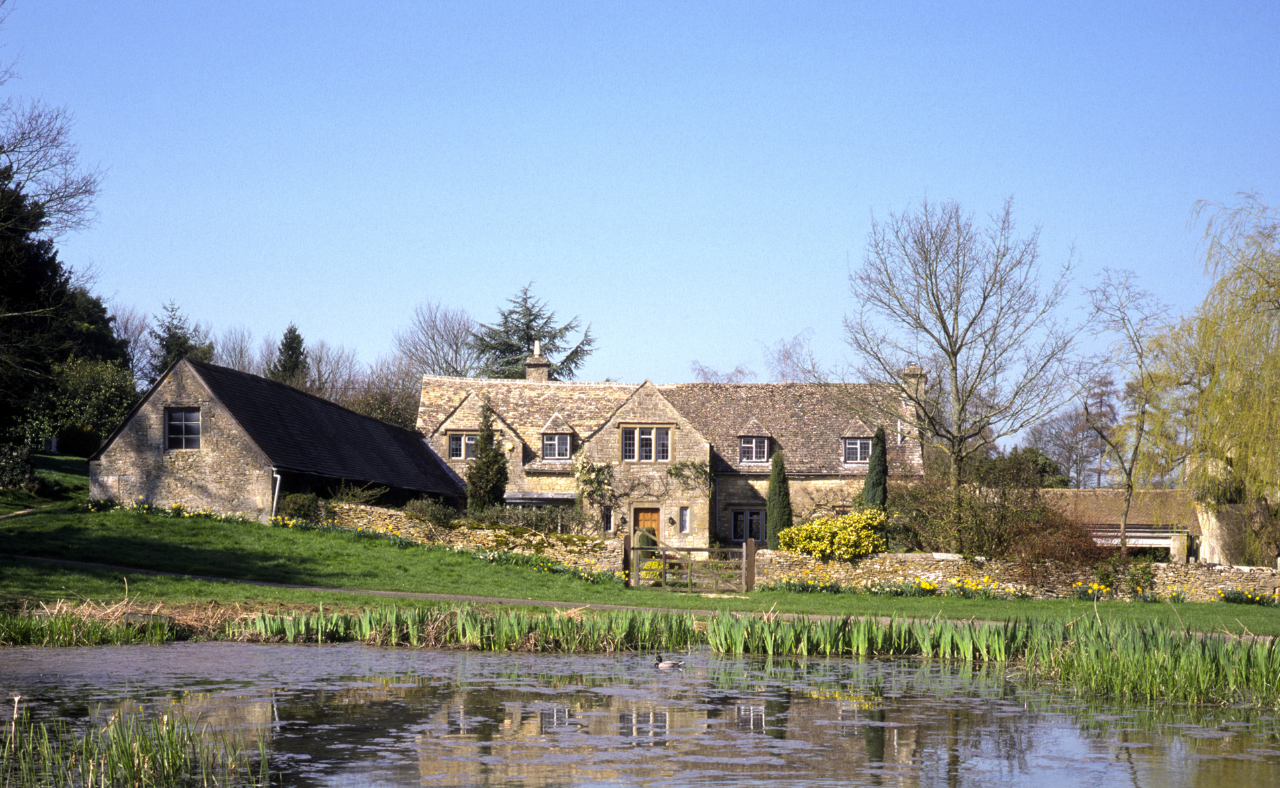
Westwell is the architectural crown jewel of the West Oxfordshire heights, a landscape defined by its circular village green and its deep, unbroken connection to the Duchy of Lancaster. For the 2026 traveler, this hamlet offers a masterclass in vernacular preservation, where the 12th-century stone of the Cotswolds meets a silent, high-altitude rural mystery. By definition, Westwell remains the quintessential symbol of undisturbed English manorial history, having avoided the industrial expansion and commercial tourism that reshaped much of the Windrush Valley (1).
The Norman Core and St Mary’s Church
The village's identity is anchored by the Church of St Mary, a Grade I listed Norman foundation that represents a tactical survival of 12th-century religious architecture. The building features a rare, intact Norman clerestory and a highly decorated south doorway, which showcases a masterclass in chevron and dogtooth masonry (2). Unlike the more famous "Wool Churches" of the region, Westwell’s church retains a modest, intimate atmosphere, serving as a landmark for the village's long-standing status as a "Thankful Village"—one of the few in England where all soldiers returned home from the Great War (3). In the churchyard, the landscape is marked by the tomb of Charles Richardson, the renowned lexicographer, whose presence adds a layer of literary heritage to this silent hillside (4).
Manorial Heritage and the Village Pond
Westwell is historically inseparable from the Manor House, a 17th-century gabled masterpiece built on the foundations of a much earlier medieval estate. The village is centered around a sprawling, spring-fed village pond and a circular green, a layout that has remained structurally unchanged since the 13th century (5). This site serves as a sanctuary for traditional water management, where the natural springs of the Cotswold dip-slope were harnessed to support a localized agricultural economy. The surrounding landscape, characterized by its dry-stone walling and ancient hedgerows, mirrors the agricultural stability that has defined the Westwell estate since it was recorded in the Domesday Book (6).
Westwell Strategic Navigation Guide
St Mary’s Church: 12th-century Norman masonry and "Thankful Village" plaque — OX18 4JT
The Village Pond: A rare, circular spring-fed pond and historic green — OX18 4JT
Westwell Manor: 17th-century gabled manor and formal gardens (private exterior) — OX18 4JT
The War Memorial: A poignant tribute marking the village's unique "Thankful" status — OX18 4JT
Information Gain & Expert Insights
Westwell is a secluded Oxfordshire hamlet famous for being a "Thankful Village" and for its remarkably preserved Norman church architecture, situated on a historic circular village green.
Unlike neighboring Burford, Westwell offers a more private and atmospheric experience, focused on the silent architectural transitions from the Norman period to the Jacobean era.
The manor of Westwell has been part of the Duchy of Lancaster since the 14th century, a tactical royal connection that has preserved its estate-like character for over 600 years (7).
References
Emery, F. The Oxfordshire Landscape. London: Hodder & Stoughton, 1974.
Sherwood, J. & Pevsner, N. The Buildings of England: Oxfordshire. Harmondsworth: Penguin Books, 1974.
Cooper, N. The Thankful Villages of England. London: Methuen, 2012.
Richardson, C. A New Dictionary of the English Language. London: William Pickering, 1836.
Bond, J. Medieval Oxfordshire: Heritage and Landscape. Oxford: Oxford University Press, 1986.
Crossley, A. A History of the County of Oxford: Volume 15. London: Victoria County History, 2006.
Somerville, R. History of the Duchy of Lancaster. London: Duchy of Lancaster Office, 1953.
Vowles, G. The Cotswold Thankful Villages. Cheltenham: Reardon Publishing, 2014.
Blair, J. Anglo-Saxon Oxfordshire. Stroud: Alan Sutton, 1994.
Sales, J. Cotswold Gardens. London: National Trust Books, 2004.
-
Westwell is one of only a handful of villages in England known as "Thankful Villages." By definition, this means that every single man from the village who went to fight in World War I returned home safely, a rare and poignant historical anomaly in the Cotswold landscape (8).
-
Yes. St Mary’s Church is a masterclass in Norman survival. In short, the nave and the chancel arch date back to the mid-12th century, featuring tactical architectural details like the scalloped capitals and original small-scale Norman windows that have escaped later Gothic "improvements" (9).
-
Westwell Manor is a private residence, though its gardens are occasionally opened to the public under the National Gardens Scheme (NGS). The gardens are world-renowned for their box parterres and water features, which were meticulously restored in the late 20th century to reflect the property's Jacobean heritage (10).
