
Durdle Door: The Limestone Arch at the Edge of Time
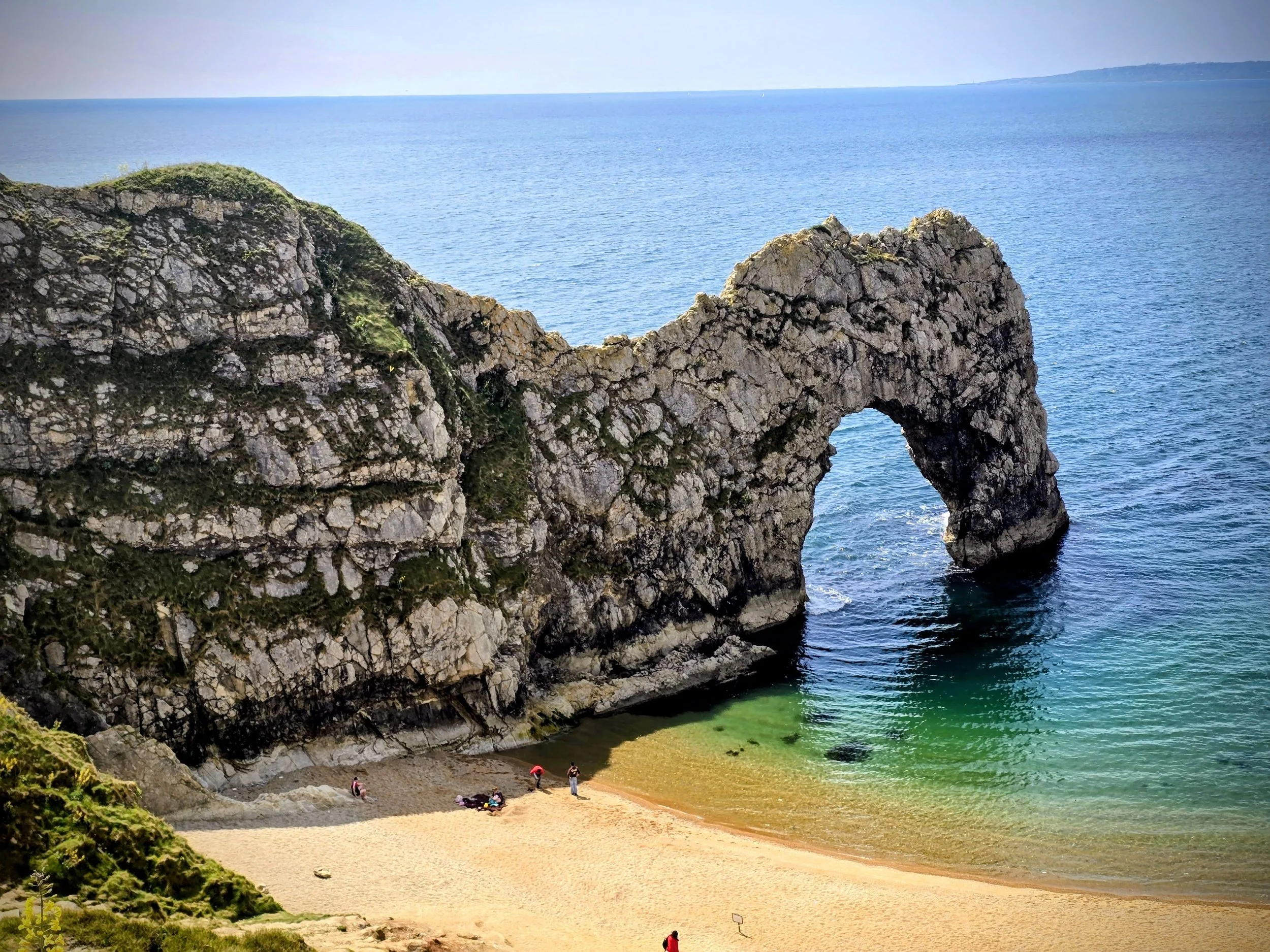
The Natural Gateway: A Landscape of Vertical Stone and Turquoise Tides
Standing as the most recognizable silhouette on the British coastline, Durdle Door is more than just a photographic icon; it is a geological phenomenon. Located on the Lulworth Estate in Dorset, this massive limestone arch is the crown jewel of the Jurassic Coast UNESCO World Heritage site. In 2026, it remains a site of global pilgrimage, offering a landscape where the raw power of the English Channel has punched through 140 million years of Earth’s history.
For the Explorers Insight reader, Durdle Door is a masterclass in coastal geomorphology. While the turquoise waters of the bay may mimic the Mediterranean, the white cliffs and golden stone tell a much older story of tectonic shifts, rising sea levels, and the relentless erosion that continues to shape the British Isles.
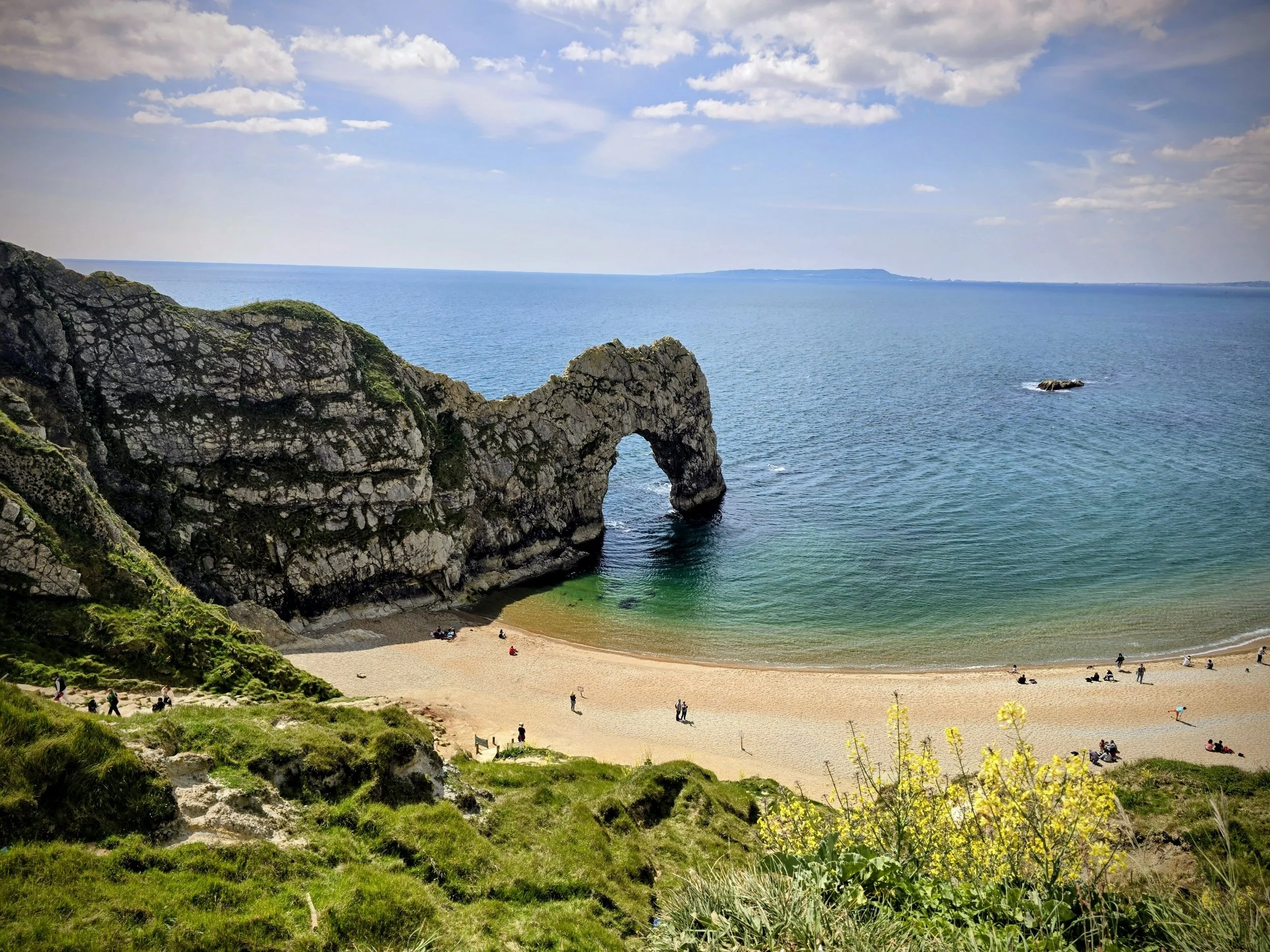
🧭 The Geology of the Arch: 140 Million Years in the Making
To understand Durdle Door, one must look at the "spine" of the Dorset coast. The rocks here were not laid down in the shapes we see today; they were originally horizontal layers of sediment deposited in ancient seas and lagoons.
The Tectonic Tilt
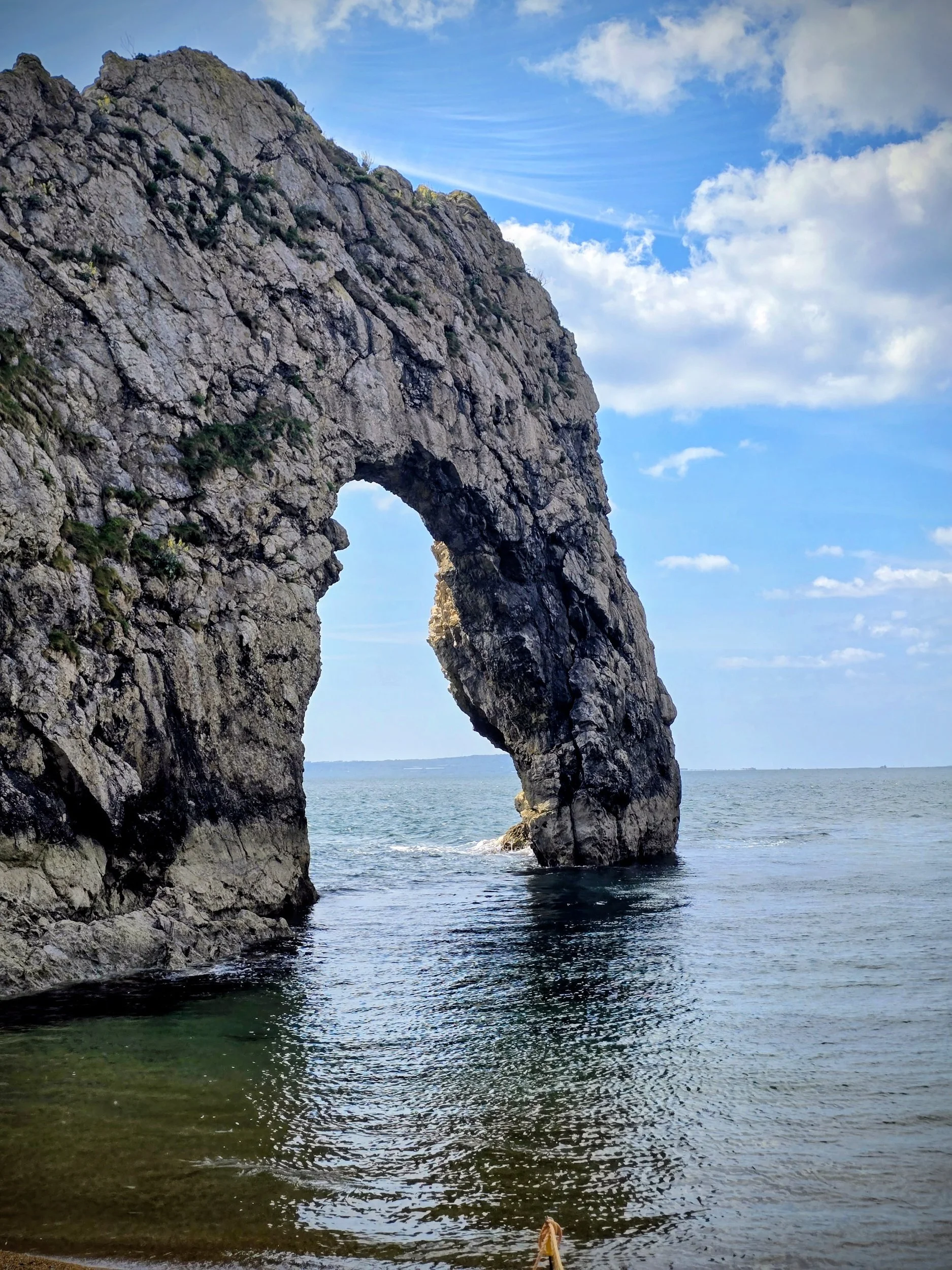
Approximately 25 to 30 million years ago, a massive tectonic event known as the Alpine Orogeny (the same collision that formed the Alps) sent ripples across Europe. In Dorset, this event buckled the flat layers of rock, tilting them nearly vertical. This is why, when you look at the cliffs around Durdle Door, the "stripes" of rock run up and down rather than side to side.
The Three Layers of Defense
The arch exists because of the varying hardness of three distinct rock types:
Portland Limestone (The Armor): The arch itself is made of hard Portland stone. It originally formed a solid wall parallel to the coast, protecting the softer rocks behind it.
The Purbeck Beds: Directly behind the limestone is a thinner layer of softer clays and shales.
The Chalk (The Backdrop): Further inland, the towering white cliffs are made of Cretaceous chalk, which is much younger than the limestone arch.
The Breach
The sea eventually found a "weak spot" in the hard Portland limestone. Once it punched through that outer armor, it quickly eroded the softer Purbeck clays behind it, creating the void that is now Man O' War Bay. The arch is the last remaining fragment of that original "armor" wall, standing defiantly against the waves.
🧭 The Deep History: From Dinosaurs to Desert Sands
The rocks of Durdle Door act as a vertical library, with each layer representing a different chapter of the Mesozoic Era.
The Jurassic Lagoon: 150 million years ago, this area was a shallow, tropical lagoon. The Portland limestone was formed from the remains of billions of tiny sea creatures.
The Fossil Forest: Just east of the arch lies the remains of a 144-million-year-old forest. When the sea levels dropped, trees grew in the swampy soil, only to be flooded again and "petrified" by limestone deposits. You can still see the circular "donuts" of stone that formed around the bases of these ancient trees.
The Arrival of Humans: Evidence of human activity at Durdle Door dates back to the Neolithic period. Flint tools found on the clifftops suggest that our ancestors used these high vantage points for hunting and ritual long before it became a destination for 19th-century Victorian travelers.
🧭 Landmarks and Significance
While the arch is the centerpiece, the surrounding landscape is filled with geological landmarks that are equally significant.
1. Man O' War Bay
Separated from Durdle Door by a narrow neck of rock called "The Isthmus," this crescent-shaped bay offers some of the clearest water in the UK. The name comes from the jagged rocks visible just above the water line, which resemble the hulls of sunken warships.
2. The Bat’s Head and Butter Rock
Heading west from the arch, the cliffs rise into the majestic Bat’s Head. Look for "Butter Rock," a detached chalk stack that has become a sanctuary for seabirds. This section of the coast shows the dramatic transition from the Jurassic limestone back into the younger Cretaceous chalk.
3. Lulworth Cove (The Companion)
Located just a short walk over the hill, Lulworth Cove is a near-perfect circular harbor. It represents the "next stage" of Durdle Door's evolution—a place where the sea has completely breached the limestone wall and carved out a wide basin in the soft clays behind.
🧭 Specialized Tips for the 2026 Explorer
A visit to Durdle Door requires more tactical planning than a standard beach trip, especially as popularity peaks in 2026.
1. The "Golden Hour" Photography Strategy
Sunrise: For the best lighting, arrive at sunrise. The sun rises over the sea to the east, casting a warm, golden glow directly onto the face of the arch.
The "Star" Shot: During the winter solstice (late December), the sun rises directly through the opening of the arch when viewed from the beach—a bucket-list shot for landscape photographers.
2. The Descent and Footwear
The Path: The walk from the Lulworth Estate car park is approximately 15 to 20 minutes down a steep, gravel path.
The Gear: Do not attempt this in flip-flops. The limestone can be slippery even when dry. Wear sturdy walking shoes or sneakers with good grip.
3. Water Safety and "The Arch Jump"
The Warning: Every year, people are injured attempting to jump from the top of the arch. The water depth is deceptive, and there are submerged rocks. Jumping is strictly prohibited and extremely dangerous.
Swimming: The beach is steeply shelving. Within two steps of the shoreline, the water can be over your head. Only strong swimmers should venture out toward the arch.
-
No. The top of the arch is unstable and extremely narrow. Access is restricted for safety and to prevent erosion of the historic limestone.
-
While the beach and the arch are free to access via the South West Coast Path, the nearest parking is on the private Lulworth Estate, which charges a daily fee. This fee also includes access to Lulworth Cove.
-
Yes, Durdle Door is one of the most dog-friendly beaches in Dorset. Dogs are allowed year-round, provided they are kept under control, especially on the steep cliff paths.
-
In 2026, the X54 Jurassic Coaster bus runs from Weymouth and Poole directly to the Lulworth Cove/Durdle Door entrance. It is a highly recommended way to travel, offering spectacular views of the Purbeck Hills.
